What happened
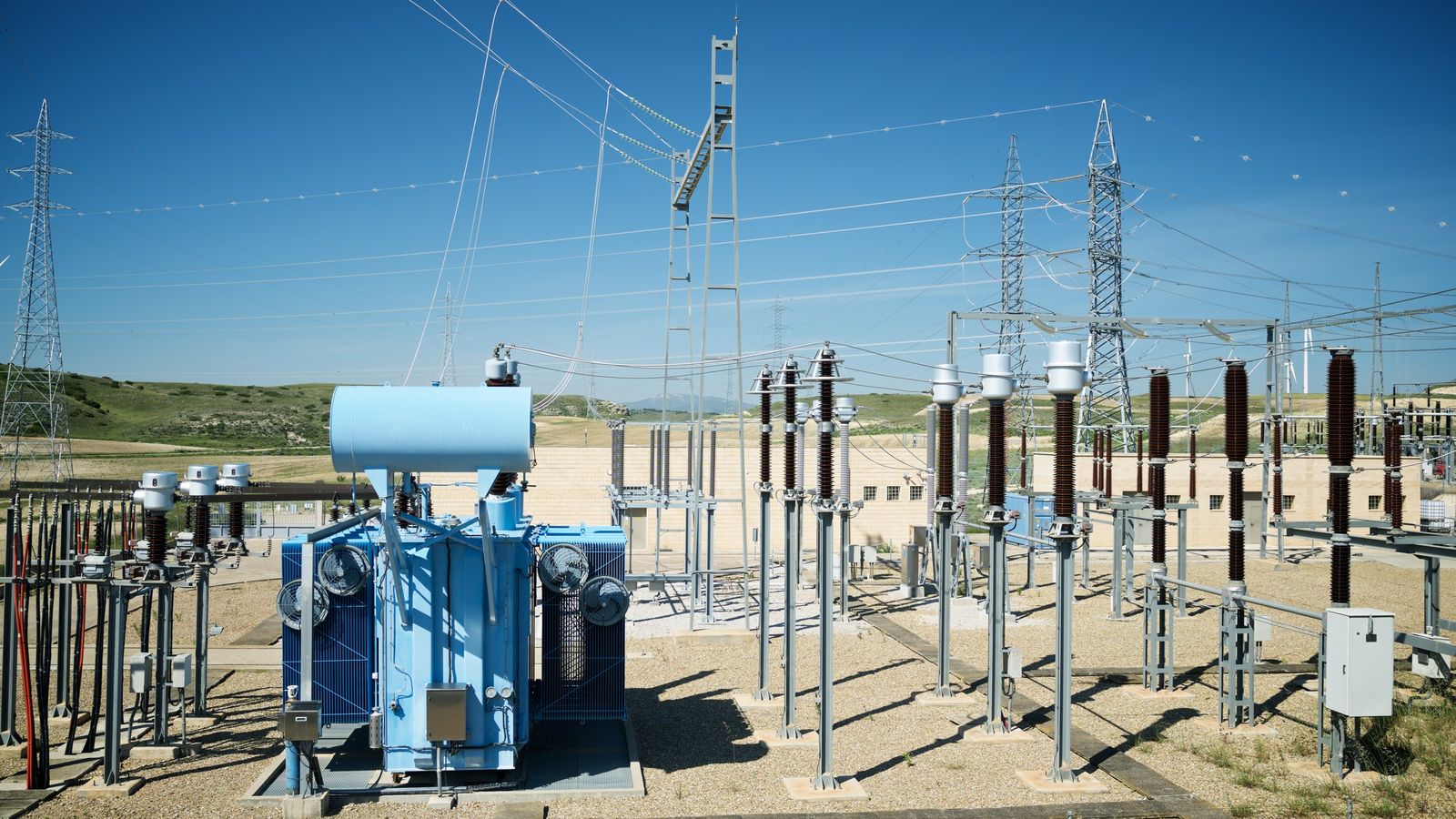
National Grid has taken a step towards building Britain's biggest electricity substation on Teesside, which could supply power to a vast neighbouring AI data centre. As Lauren Almeida reported for The Guardian on 1 November 2026, the company agreed last week to buy 29.5 hectares (73 acres) of land at Dorman Point, on the Teesworks site. The deal was first reported by Sky News. National Grid's head of land, Matt Pearce, said it would "support the growth of AI and digital technologies". National Grid's project page describes proposals for a new substation at Dorman Point.
The Tees Valley mayor, Ben Houchen, told Sky News that "up to 3.2GW of capacity" would let the area compete for data centre projects. That figure is his; National Grid has not published a capacity for the site.
The news follows the government's publication on 28 October 2026 of its draft National Policy Statement for Data Centres for consultation, which calls data centres "as fundamental to our economy as the railways and electricity networks" and sets the planning rules for the biggest sites in England:
- Which sites: projects with at least 100 MW of rated IT load are likely to count as nationally significant and can be decided by the Secretary of State rather than the local council.
- Efficiency: applicants are expected to show the design meets a Power Usage Effectiveness of 1.3 or better.
- Emissions: applicants must show how they limit the development's emissions, covering energy demand, efficiency and electricity supply, and should consider reusing waste heat through heat networks, or explain why not.
- Own power stations: generating power on site "behind the meter" is a temporary option only for projects the government judges exceptionally strategic, once every way to connect to the grid faster has been tried.
The consultation is open to anyone and closes at 11:59pm on 8 January 2027.
What 3.2 GW means in electricity and carbon
Nobody has said how much electricity the Teesside data centre would actually use, so here is the upper end, worked out with the same engine and the 2026 UK government electricity factor the app uses (0.13096 kg CO2e per kWh):
- Flat out all year: 3.2 GW for 8,760 hours is about 28 TWh, or about 3.7 million tonnes CO2e.
- At an illustrative 70% average load: about 19.6 TWh, or about 2.6 million tonnes CO2e.
- The smallest "nationally significant" site: 100 MW of IT load at the PUE target of 1.3 draws 130 MW in all. Running flat out that is 1,138,800 MWh a year, about 149,137 tonnes CO2e.
For scale, 3.2 GW is about 53% of the 6 GW of AI data centre capacity HM Treasury's Data Centre Covenant says the UK needs by 2030. Two cautions: the grid factor is a national average that falls as the grid gets cleaner, so the real figure depends on the year and on how the extra demand is met; and a data centre that buys renewable electricity would report a lower market-based figure. These are our estimates, not the developer's.
What it means for your business
Your cloud use is someone's data centre. Email, accounts software, file storage and websites all run in data centres, and the electricity behind them sits in your Scope 3, category 1, purchased goods and services. The draft policy asks the largest new sites to assess and limit their emissions, which should make better supplier figures easier to get over time.
Grid capacity is the bottleneck for everyone. The mayor's point that power is "the biggest problem" for data centres applies to any business waiting for a new or bigger connection, for a heat pump, chargers or a new site. Big demand projects compete for the same network.
Waste heat could become a local resource. The draft policy asks applicants to consider supplying heat networks. If one is built near you, heat from a network is reported in Scope 2 with its own factor.
What to do now
- If you run or plan a data centre, read the draft and respond. The draft National Policy Statement is open for comments until 8 January 2027.
- Ask your hosting and cloud providers for your share. Ask for the kWh and CO2e behind your account, the PUE of the sites you use and whether figures are location-based or market-based. Our post on asking suppliers for carbon data has the wording.
- Keep a spend-based figure until you have a better one. Our guide to IT, cloud and laptop emissions shows where each item sits in your footprint.
- Planning a bigger grid connection? Start early with your network operator, and read our post on the Data Centre Covenant for how strategic sites get priority.