What happened
At the COP31 climate summit in Antalya, the European Union joined the Global SF6 Pledge on 19 November 2026. The pledge was launched by Germany to cut emissions of sulphur hexafluoride (SF6) from the power sector.
- Who has signed:35 countries representing roughly a third of the global economy, the Commission says, with support from the World Bank and the Climate and Clean Air Coalition. The release doesn't list them.
- What they commit to: better data on SF6 stocks and emissions, keeping emissions to a minimum through careful handling, and encouraging SF6-free technology.
- Why now: the Commission says the aim is to stop the global build-out of power grids locking in SF6, which stays in the atmosphere for thousands of years and leaks over the long life of the equipment.
- EU rules already: under the EU F-gas Regulation, SF6 must in principle be phased out of new switchgear by 2032. Climate Commissioner Wopke Hoekstra said: "SF6 has got to go. Alternatives exist."
Great Britain has no statutory ban on new SF6 switchgear. Research for DESNZ in October set out how one could work, which we covered in our post on the SF6-free switchgear report.
What it means for your business
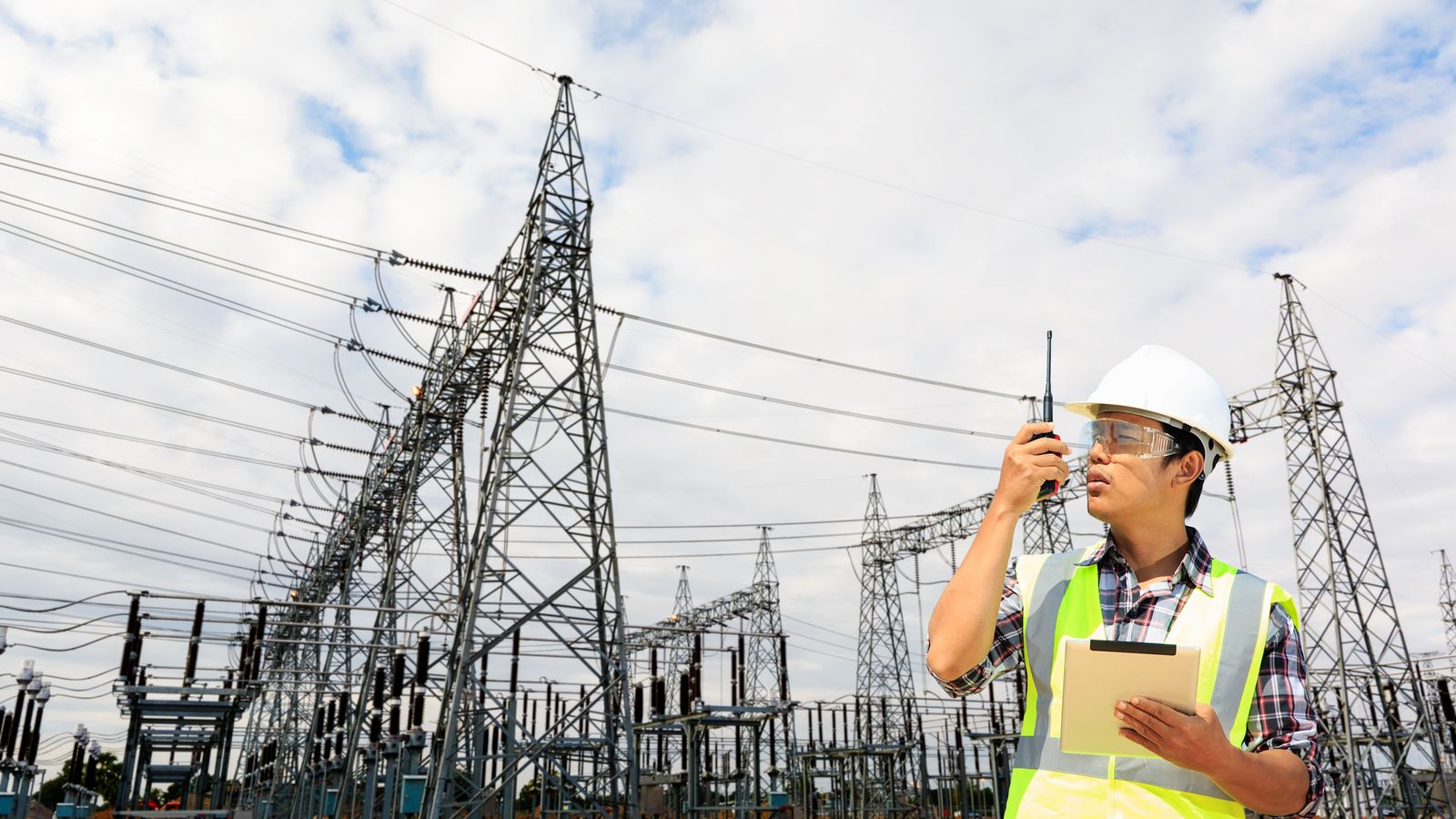
Most businesses don't own SF6. If you take power at low voltage, the switchgear belongs to the network operator and its leaks are not in your report. If your site has its own high-voltage supply (a factory, a large warehouse, a hospital, a campus or a data centre with its own substation or ring main unit), SF6 that leaks from equipment you own or control is Scope 1.
Our sums. An engineer services a site's 11kV switchgear and tops it up with 1.5 kg of SF6 (an illustrative figure). At the DESNZ 2026 factor of 23,500 kg CO2e per kg, that is 35,250 kg CO2e, the same as 269,166 kWh of grid electricity at 0.13096 kg per kWh. A small top-up can outweigh a year of a small office's power.
Equipment choices last decades. The Commission points to the long lifetimes of SF6 equipment. Where you're replacing or adding high-voltage equipment, asking for an SF6-free option now avoids carrying a leak risk for the life of the kit, and is in line with where EU rules have already gone.
What to do now
- Find out who owns your switchgear. If it's yours, ask your maintenance contractor how much SF6 each unit holds.
- Ask for top-up records after each service visit, in kg, and report them as Scope 1 with the DESNZ factor.
- On new or replacement equipment, ask for an SF6-free quote alongside the standard one.