What happened
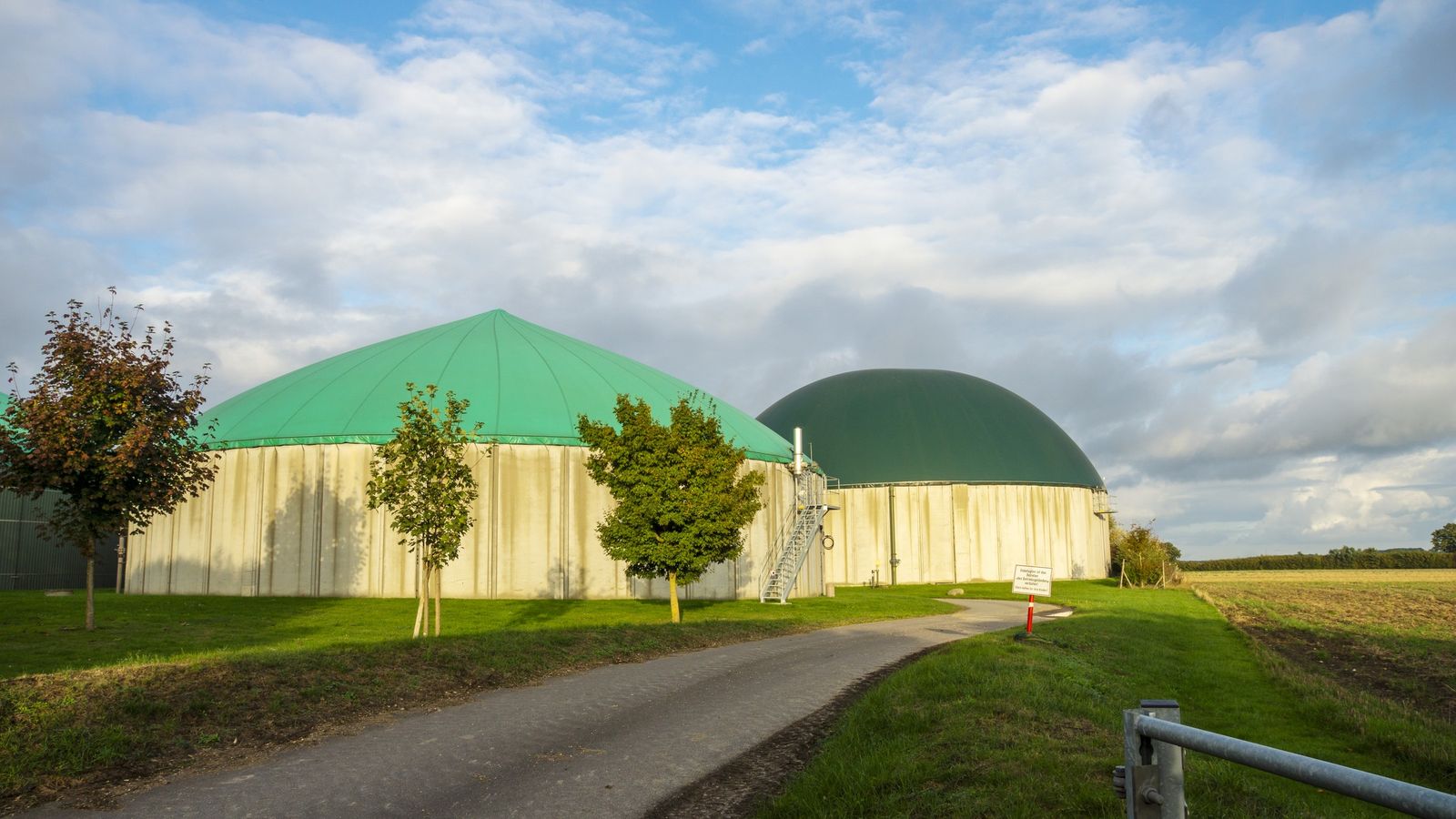
The Department for Energy Security and Net Zero (DESNZ) published two studies on anaerobic digestion (AD) on 20 November 2026, both carried out by Alder Bioinsights. AD plants break down food waste, manure, sewage sludge and crops to make biogas, which is burned for power and heat or cleaned up into biomethane for the gas grid. The UK produces about 7 TWh of biomethane a year, according to the first study.
Methane Emissions from Anaerobic Digestion (MEAD) 2.0 looked at where methane escapes from AD sites and how to stop it. Methane is around 28 times more powerful than CO2 over 100 years, the report says, so small leaks matter. It found:
- earlier studies measured losses of 4% to 22% of total methane production at the sites investigated;
- half the digesters assessed in its own site surveys leaked methane to some extent, often at roofs, tank joints and membrane fixings;
- pressure relief valves leaked at 5 of 8 sites visited;
- the equipment that upgrades biogas to biomethane loses anywhere from under 0.1% to 5% of its methane depending on the technology, and the off-gas measured at sites ranged from 0.13% to 9.05% methane;
- digestate, the material left after digestion, keeps producing methane in storage, which the report calls significant and under-addressed.
Its conclusion is that methane losses are "common but avoidable", and that operator expertise, installation quality and maintenance matter more than the type of feedstock. A good practice guide for operators was published alongside it.
The life cycle assessment modelled the whole UK AD fleet. It puts the average carbon intensity of biomethane at 14.8 g CO2e per MJ, 78% below UK natural gas at 66.1 g, or 23.65 g if no credit is given for manure that would otherwise have released methane. The fleet's total emissions in 2024 were about 283 thousand tonnes CO2e for 5.31 TWh of biomethane. Fugitive methane was the most influential variable: the study tested 1% to 7.8% of site production around a 2.5% baseline, enough to more than double or halve the total. DESNZ says its tool is for modelling only and must not be used for reporting under the Green Gas Support Scheme.
What it means for your business
If you send food waste to AD, keep doing it. Under Simpler Recycling, businesses in England with 10 or more employees must already separate food waste, and AD is where most of it goes. On the 2026 government factors food waste to AD is 9.00687 kg CO2e per tonne. An illustrative restaurant sending 6 tonnes a year reports 0.05 tonnes CO2e; the same food waste in landfill would be 4.20 tonnes. The studies don't change the government factor, which is a standard figure for the whole sector.
If you buy green gas, the life cycle assessment backs the case that biomethane is lower carbon than fossil gas on average, but shows it depends on how well each plant is run. Natural gas from the grid is reported as Scope 1 at 0.18231 kg CO2e per kWh in the 2026 factors whatever tariff you are on; any claim for green gas needs your supplier's evidence and its own line in your report.
If you run an AD plant or farm with one, leaks are lost product as well as emissions. The report says cost is often seen as a barrier to routine leak detection and repair, even though methane loss directly reduces plant revenue.
What to do now
- Record food waste by weight. Ask your waste contractor for tonnes collected and where it went, so you can report it with the AD factor.
- Ask green gas suppliers for evidence: where the biomethane comes from and how its carbon intensity was worked out.
- AD operators: read the good practice guide and check your leak detection routine against it.