What happened
On the afternoon of 2 November 2026, two months before the UK Carbon Border Adjustment Mechanism (CBAM) starts on 1 January 2027, HMRC updated its guidance Work out your Carbon Price Relief. Its change note says it has "set out use of actual and default values for emissions in calculating Carbon Price Relief". Minutes later HM Treasury and HMRC updated the CBAM policy summary with the same point.
Carbon Price Relief lets an importer take a carbon price already paid on the goods where they were made off its UK CBAM tax. The guidance works it out in two parts:
- The effective carbon price. From the producer's carbon pricing verification form, take the installation's total emissions for one of the two calendar years before the year of import, multiply the emissions under each priced element of the scheme by its price for the previous calendar quarter, add them up and divide by total emissions. Free allowances count at zero, and any compensation or rebate for the same year is taken off. HMRC's own example gets to $18.30 a tonne of CO2e, or $10.30 after $8 a tonne of compensation.
- The relief. Multiply the effective carbon price by the embodied emissions of the good that were subject to the scheme. This is the part that changed: use the same emissions values as in your CBAM emissions reporting, which may be actual emissions or default values depending on the method you used. Do it for each good, including a CBAM good used to make another CBAM good.
A carbon price paid in another currency must be converted to sterling at exchange rates HMRC will publish from 1 January 2027, using the rate for the calendar quarter before the import, and rounded down to two decimal places. The relief can never be more than the CBAM tax due, and it needs a carbon pricing verification form checked by an accredited independent verifier.
What it means for your business
If you import CBAM goods (iron and steel, aluminium, cement, fertiliser and hydrogen), you can no longer mix methods: if you report a good on the default value, the relief is worked out on the default value too, and if you have a producer's verified actual figure, both use that. The default values include a 10% markup in every sector except fertiliser, so a default gives a bigger relief as well as a bigger charge, but you still pay the gap between the UK rate and the price paid abroad on every tonne, markup included.
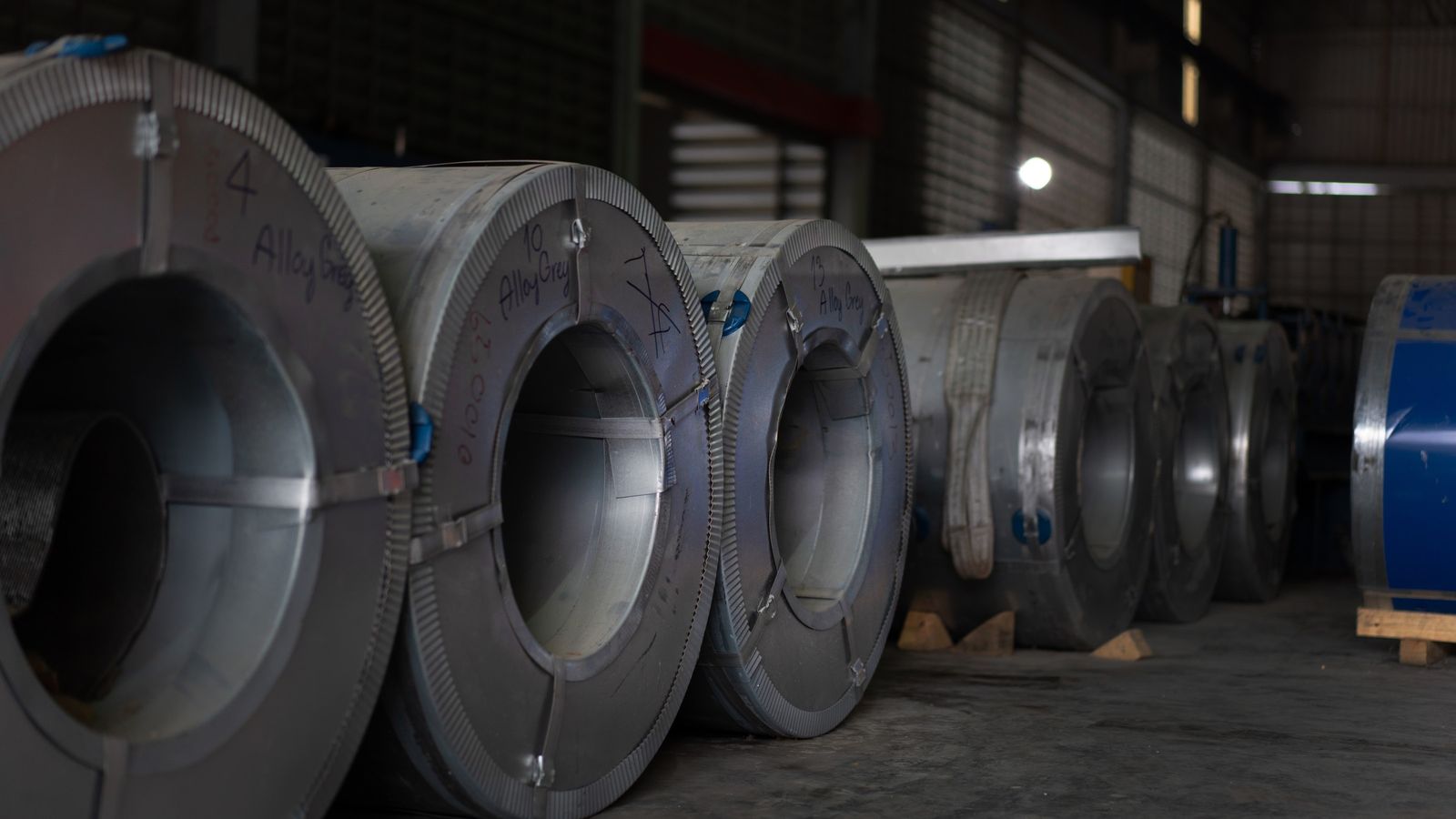
A worked example. Say you import 1,000 tonnes of hot-rolled steel coil at least 10mm thick (commodity code 72083600) in January to March 2027, and the mill's carbon pricing verification form gives an effective carbon price of £6.00 a tonne of CO2e once converted to sterling. The UK rate for iron and steel is £9.69 a tonne (illustrative rate; the official rates are due before the end of 2026).
- On the default value of 3.24 tCO2e per tonne: 3,240 tCO2e, a charge of £31,395.60, relief of £19,440.00, leaving £11,955.60 to pay. Without any relief it would be £31,395.60.
- On a producer's verified figure of 2.1 tCO2e per tonne (made up for the example): 2,100 tCO2e, a charge of £20,349.00, relief of £12,600.00, leaving £7,749.00, which is £4,206.60 less than the default route.
The relief is capped at the charge, so where a producer has paid a carbon price at or above the UK rate, there is nothing left to pay on that good, whichever method you use. All figures here are an illustration, not tax advice: your own sums depend on the official rate for the quarter and on what the verification form shows.
If you sell these goods to UK importers, expect to be asked for both a verified emissions figure and a carbon pricing verification form. The two now travel together.
What to do now
- Decide, good by good, whether you will report on default values or on producers' actual figures. HMRC already says a return filed on default values can't later be amended with actual data, and the relief now follows the same choice.
- Ask each overseas producer that pays a carbon price for a carbon pricing verification form covering one of the two calendar years before you import, and check who verified it (HMRC lists the accreditation standards on its verification form page).
- Keep the published price for each priced element for the quarter before import, and plan to pick up HMRC's exchange rates when they appear from 1 January 2027.
- If you're not sure whether you need to register at all, the threshold is £50,000 of CBAM goods in a year: our free UK CBAM registration checker walks through it, and the guide to calculating CBAM covers the whole sum. Our earlier post on the illustrative 2027 rates and default values explains where the rate comes from.