What happened
NESO, which plans Great Britain's gas and electricity systems, published its annual Gas Supply Security Assessment on 18 November 2026. It looks five and ten years ahead, this time at winters 2031/32 and 2036/37, and this year models every day of 1,400 simulated winters, adjusted for today's warmer climate with the Met Office, rather than a handful of cold days. As Lucy King reported for Energy Live News, the headline is that supply is expected to stay secure into the late 2030s when all sources are available.
The main findings:
- Intact network, low risk. With every terminal, pipeline and storage site working, the margin on a 1-in-20-year peak day stays above 30 million cubic metres in both winters, and supply beats demand in more than 99.8% of simulations even on the slowest decarbonisation pathway.
- Lose the largest asset and margins vanish. On NESO's base case the margin on that peak day falls to 3 million cubic metres in 2031/32 and to minus 3 in 2036/37. Over a whole winter with that asset out, the chance of at least one day short is 4% in 2031/32 and 6% in 2036/37 on the base case, and 26% in both winters on the slowest pathway.
- Less risk than last year's report, but not gone. The 2025 assessment put the base case N-1 margin at minus 76 million cubic metres for 2030/31. NESO says the climate-adjusted demand data and better supply figures (more from the Vesterled pipeline from Norway and the UK North Sea) reduce, but do not remove, the risk.
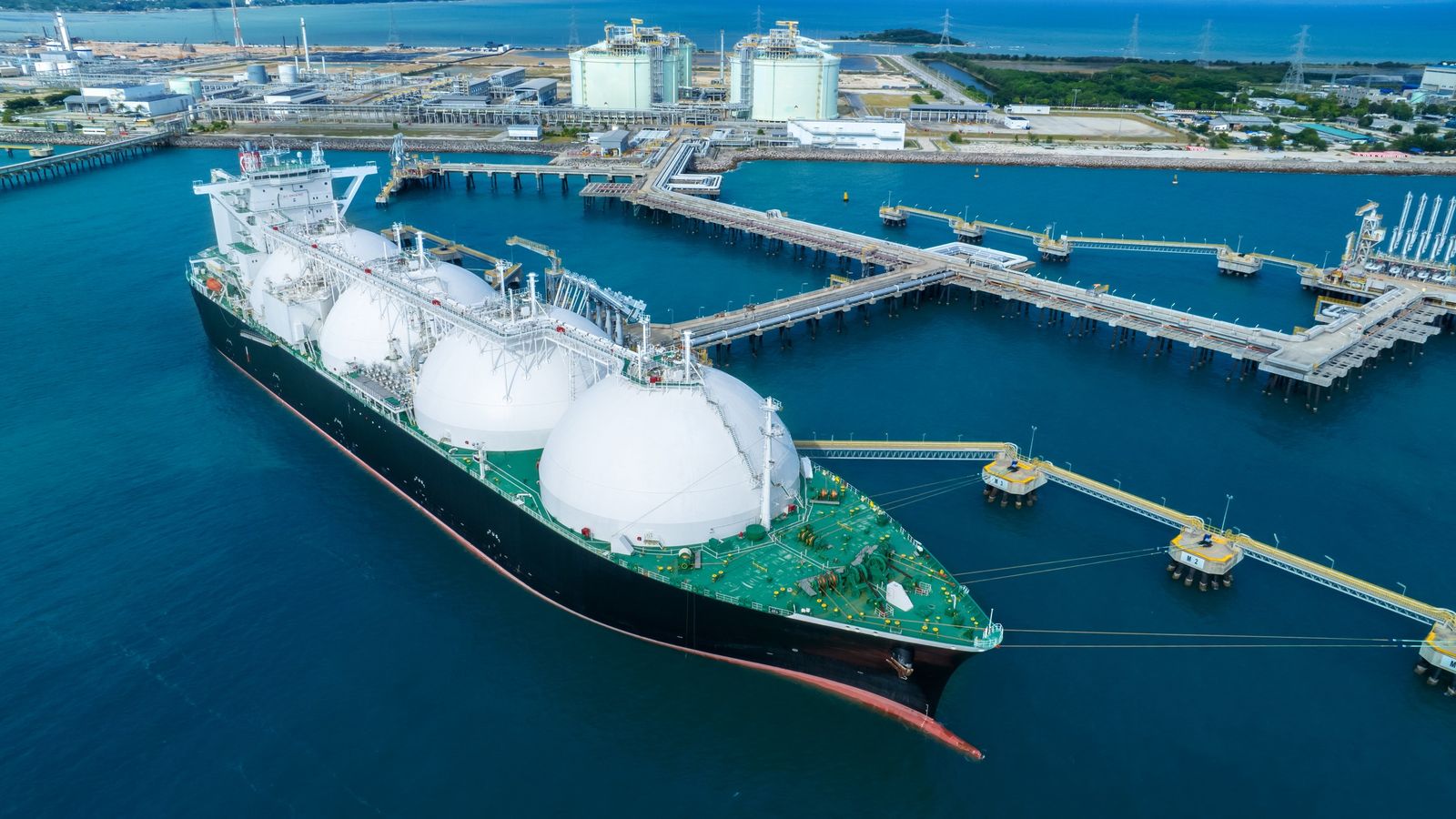
- North Sea output keeps falling. The UK Continental Shelf delivered an average of 74 million cubic metres a day last winter. NESO projects a maximum of 32 in winter 2031/32 and 16 in 2036/37, so Britain will keep relying on imports, liquefied natural gas, storage and the interconnectors with Europe.
| Pathway | N-1 margin, winter 2031/32 (mcm) | N-1 margin, winter 2036/37 (mcm) |
|---|---|---|
| Ten Year Outlook (NESO's base case) | +3 | minus 3 |
| Falling Behind (slowest decarbonisation) | minus 34 | minus 34 |
| Holistic Transition (fastest decarbonisation) | +64 | +109 |
Source: NESO, Gas Supply Security Assessment (November 2026), Table 6. The margin is supply left over on a 1-in-20-year peak day after losing the largest piece of supply infrastructure; below zero is a shortfall. mcm = million cubic metres.
Dr Deborah Petterson, NESO's Director of Whole Energy System Resilience, said: "Gas security remains fundamental to the resilience of Great Britain's whole energy system." NESO says the Department for Energy Security and Net Zero is working on long-term measures through its Gas System in Transition: Security of Supply consultation and will set out its preferred options in due course.
What it means for your business
Nothing changes this winter. The report is about the 2030s. National Gas says Britain is expected to have enough gas supply capability this winter. Any shortfall would be handled by National Gas as system operator, and NESO says that in extreme cases that could require some demand to be disconnected.
Cutting gas demand is the mitigation that works on every pathway. The N-1 margin stays positive in both winters only on NESO's fastest decarbonisation pathway, where heat pumps and cleaner power take gas off the coldest days. A business that moves heating off gas lowers its own exposure to winter gas prices and moves those emissions from Scope 1 to Scope 2. Our post on heat pump grants for businesses works through what that switch does to a footprint.
Your carbon doesn't depend on where gas comes from. A business burning 60,000 kWh of gas a year for heating reports 10.94 tonnes CO2e in Scope 1 at 0.18231 kg per kWh on the 2026 government factors, whether the gas came from the North Sea, Norway or a tanker of liquefied gas. The government factor covers burning it; the extra emissions from shipping and liquefying imported gas sit in the separate well-to-tank factor in Scope 3.
Our sums: a peak day in carbon. NESO puts the 1-in-20-year peak day in winter 2031/32 at 410 million cubic metres on its base case (last winter's highest day was 407). At the government factor of 2.02633 kg CO2e per cubic metre, burning that much gas produces about 830,795 tonnes CO2e in a single day. On the slowest pathway the same day needs 447 million cubic metres; the extra 37 million is about 74,974 tonnes CO2e that day, and it is that extra demand that turns a narrow pass into a shortfall.
The same morning SSE said it expects to start closing its Atwick gas storage site from summer 2027 without government support, which we covered in our post on Atwick. NESO's report counts on storage and the interconnectors on the coldest days: on the slowest pathway a typical winter needs storage withdrawals on at least 18 days by 2036/37.
What to do now
- Record gas in kWh every month from bills or meter reads, so you know how much of your footprint and your bill falls on the coldest weeks.
- Check your gas contract: its end date, whether the price is fixed through winter, and whether it allows your supply to be interrupted.
- Put your heating replacement date in your carbon reduction plan. A boiler fitted now could well still be running in the winters NESO assessed.