What happened
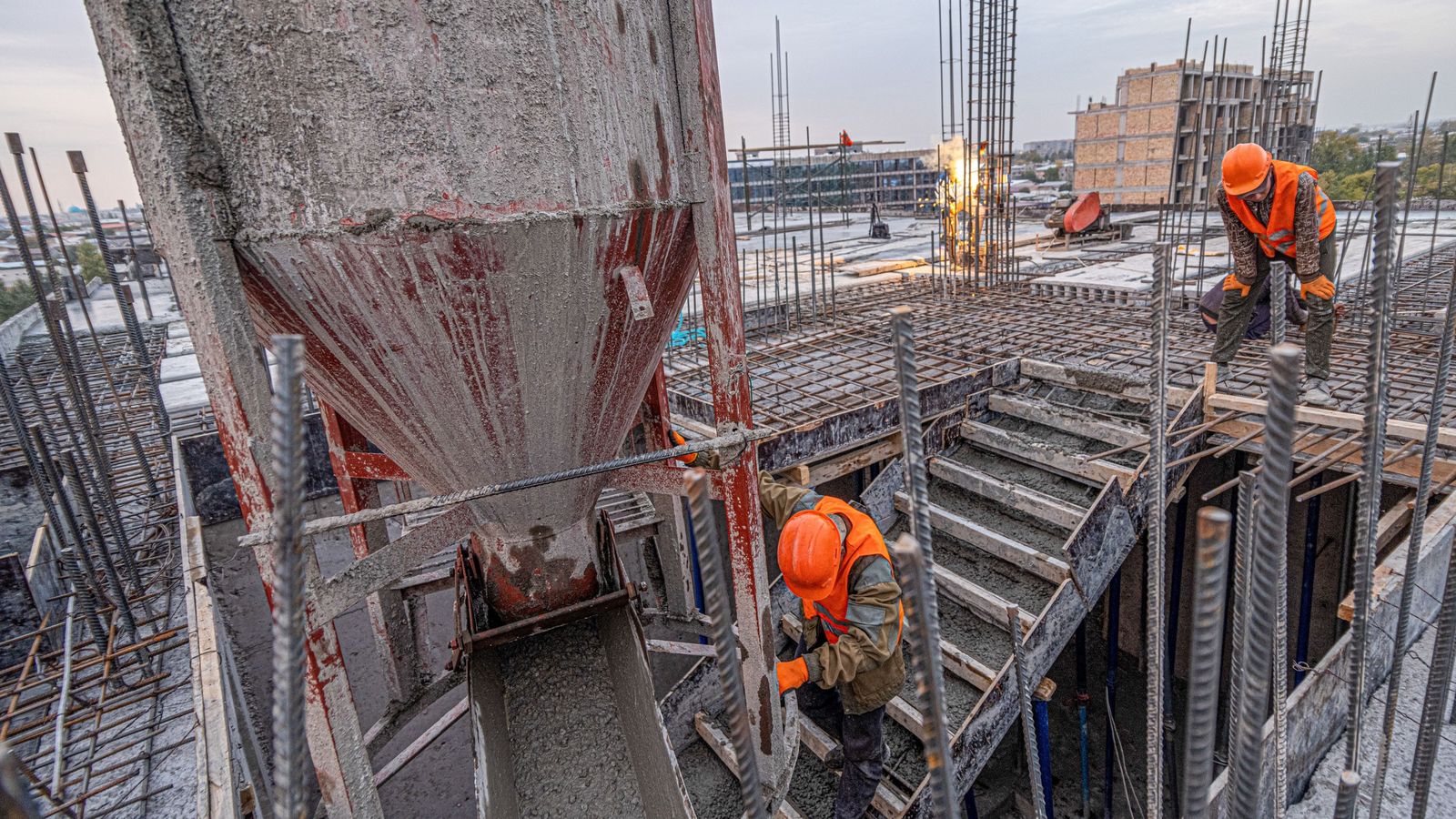
Heidelberg Materials UK, the cement, concrete and aggregates producer, announced on Thursday 26 November that it had worked with the contractor BAM UK & Ireland and the Environment Agency to deliver what it calls the UK's first carbon-negative in-situ ready-mixed concrete. As Amber Rolt reported for BusinessGreen, it is the first time the company has reached a negative global warming potential in ready-mixed concrete.
The concrete contains ACLA, an aggregate-like pellet made from biochar by Low Carbon Materials, which replaces part of the usual stone or sand. It was poured as blinding, a non-structural layer, during construction of a fish and eel pass at Bell Weir on the River Thames at Runnymede, Surrey, as part of a refurbishment funded by the Environment Agency's net zero carbon pilot programme. The mix was trialled at Heidelberg's Greenwich laboratory.
Heidelberg says the finished concrete had a cradle-to-gate (A1-A3) global warming potential of -34 kg CO2e per cubic metre, against around 150 kg for an equivalent GEN 3 general-purpose concrete. Its concrete technical director, Daniel Clayton, said the results "demonstrate the potential for us to decarbonise the aggregate content of concrete". The trial has led to further trials for future BAM projects.
What it means for your business
Concrete is a big part of a building's footprint, and until now the work has gone into the cement. Cement is the high-carbon part of concrete, which is why we covered cement imports and the CBAM on 18 November. This trial shows a second lever: the aggregate itself can be made to store carbon.
Here is the scale on a small job. Take 200 cubic metres of non-structural concrete, the sort used for blinding, kerb beds or the ground slab of a small unit. On Heidelberg's figures, a standard GEN 3 mix carries about 30.00 tonnes CO2e from cradle to gate, and the ACLA mix -6.80 tonnes. The gap is 36.80 tonnes, about the same as burning 14,244 litres of diesel at the 2026 government factor of 2.58354 kg per litre.
Read the small print on any "carbon negative" figure. A1-A3 covers raw materials, transport to the plant and manufacture. It leaves out delivery to site, the pour, the building's life and demolition, so the concrete in place is not carbon negative overall. The negative number comes from carbon stored in the biochar, not from emissions avoided, and so far it is one non-structural trial, not a product you can order for a structural frame.
What to do now
- Ask for a per cubic metre figure. When you buy ready-mixed concrete, ask the supplier for its A1-A3 kg CO2e per cubic metre from an environmental product declaration (EPD), and use it instead of a generic average for your Scope 3, category 1.
- Keep stored carbon visible. If a supplier's figure is negative because of biochar, keep the EPD and note where the negative comes from, so anyone checking your report can see stored carbon has not been netted off against your own fuel and electricity.
- Start with the non-structural pours. Blinding, kerbs and fill are where Heidelberg trialled it, and where low-carbon mixes are easiest to specify. Our construction page covers the rest of a contractor's footprint.