What happened
The World Meteorological Organization (WMO), the UN's weather and climate agency, published its State of the Climate 2026 Update on 9 November 2026, the first day of the COP31 climate talks in Antalya, Türkiye. As Damien Gayle reported for the Guardian, the report finds the Earth is accumulating heat at an accelerating rate. The main findings, checked against WMO's own release:
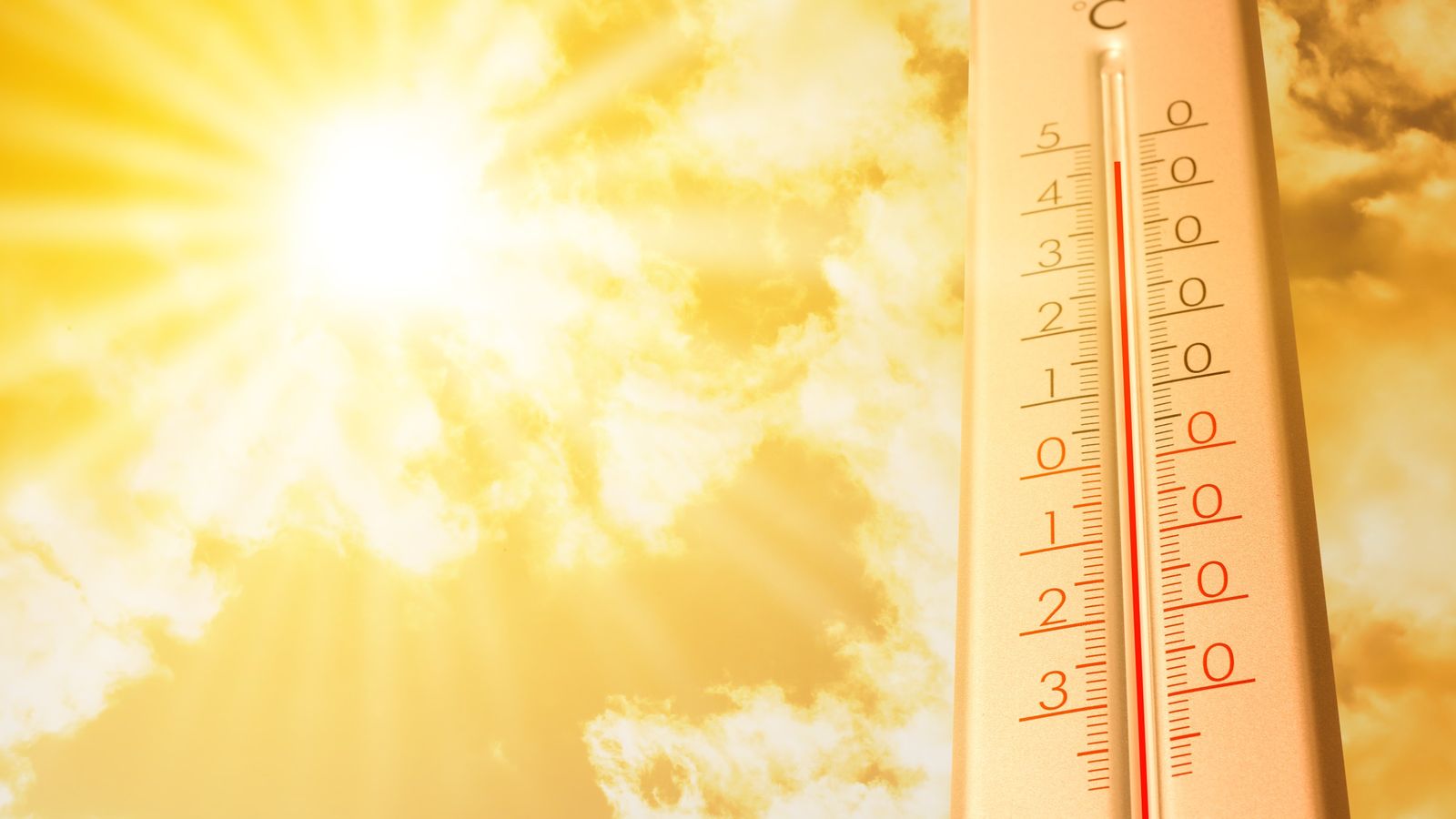
- Temperature: the global average from January to September 2026 was 1.47 °C (± 0.13 °C) above the 1850 to 1900 average, on nine datasets. That is similar to the full years 2025 (1.43 °C) and 2023 (1.46 °C) and below the 2024 record of 1.55 °C. WMO says 2026 will be one of the four warmest years, and that the past four years, 2023 to 2026, are the four warmest on record.
- El Niño: intensifying since August and expected to be the strongest on record by December, continuing into early 2027. El Niño typically adds 0.1 to 0.2 °C to the global average, so the final 2026 figure is likely to be higher than the January to September one.
- Greenhouse gases: new records in 2025, with carbon dioxide at 426.8 parts per million, methane at 1,948 parts per billion and nitrous oxide at 339.1. WMO says El Niño events typically lead to a surge in concentrations.
- Heat in the system: Earth's energy imbalance, the gap between the energy coming in from the sun and going out, reached its highest level since monitoring began in 1960. The ocean absorbs 90% of the excess, and 2026 is on track to be the tenth year in a row of record ocean warmth. Sea level is at a record high, and glaciers lost more than 400 billion tonnes of ice in 2025.
- Extremes: WMO cites preliminary estimates of more than 30,000 excess deaths from Europe's heatwaves, drought and wildfires, with major impacts on farming, energy and transport.
"El Niño and indeed the state of the global climate in 2026 gives new meaning to the phrase off the charts," said WMO Secretary-General Celeste Saulo. The report uses data up to September; the final State of the Global Climate 2026 report follows in March 2027. BBC News also led on the findings this morning.
What it means for your business
No new rule, but a stronger case for looking at physical risk. The report is science for the COP31 negotiators, and it sits alongside WMO's Greenhouse Gas Bulletin of late October. For a business, the practical point is the weather: WMO expects El Niño to act as a "risk multiplier" for heat, drought and heavy rain into 2027. Buyers and public sector tenders increasingly ask suppliers about climate risk, and a short, honest answer about heat and flood risk at your sites is easier to give if you have looked.
Hotter summers show up in your footprint. Cooling runs on electricity, which is Scope 2, and air conditioning that leaks refrigerant adds Scope 1 emissions that are small in kilograms and large in CO2e.
A worked example: a hot summer in the office
- An illustrative office runs 2 portable air conditioning units of 1.2 kW for 8 hours a day on 30 hot working days: 576 kWh of electricity, or 75 kg CO2e on the 2026 UK factor of 0.13096 kg per kWh.
- If a split unit then needs a 0.6 kg top-up of R32 refrigerant, the leaked gas counts as 406 kg CO2e of Scope 1, more than all that electricity.
The kWh and kilograms are illustrative; the factors are the government's, applied by the app's engine.
What to do now
- Check your sites. Our guide to a climate risk assessment shows how to look at heat and flooding for each site, and our post on checking flood risk for business premises lists the official maps.
- Log air conditioning and refrigerant top-ups. Ask your engineer for the gas type and kilograms on every service sheet, so leaks go into Scope 1.
- Keep a note of extreme weather. A heatwave or a flood explains a spike when you compare years or set a reduction target.
- Follow COP31. Our story on what is on the table in Antalya covers the electrification and carbon pricing push.