What happened
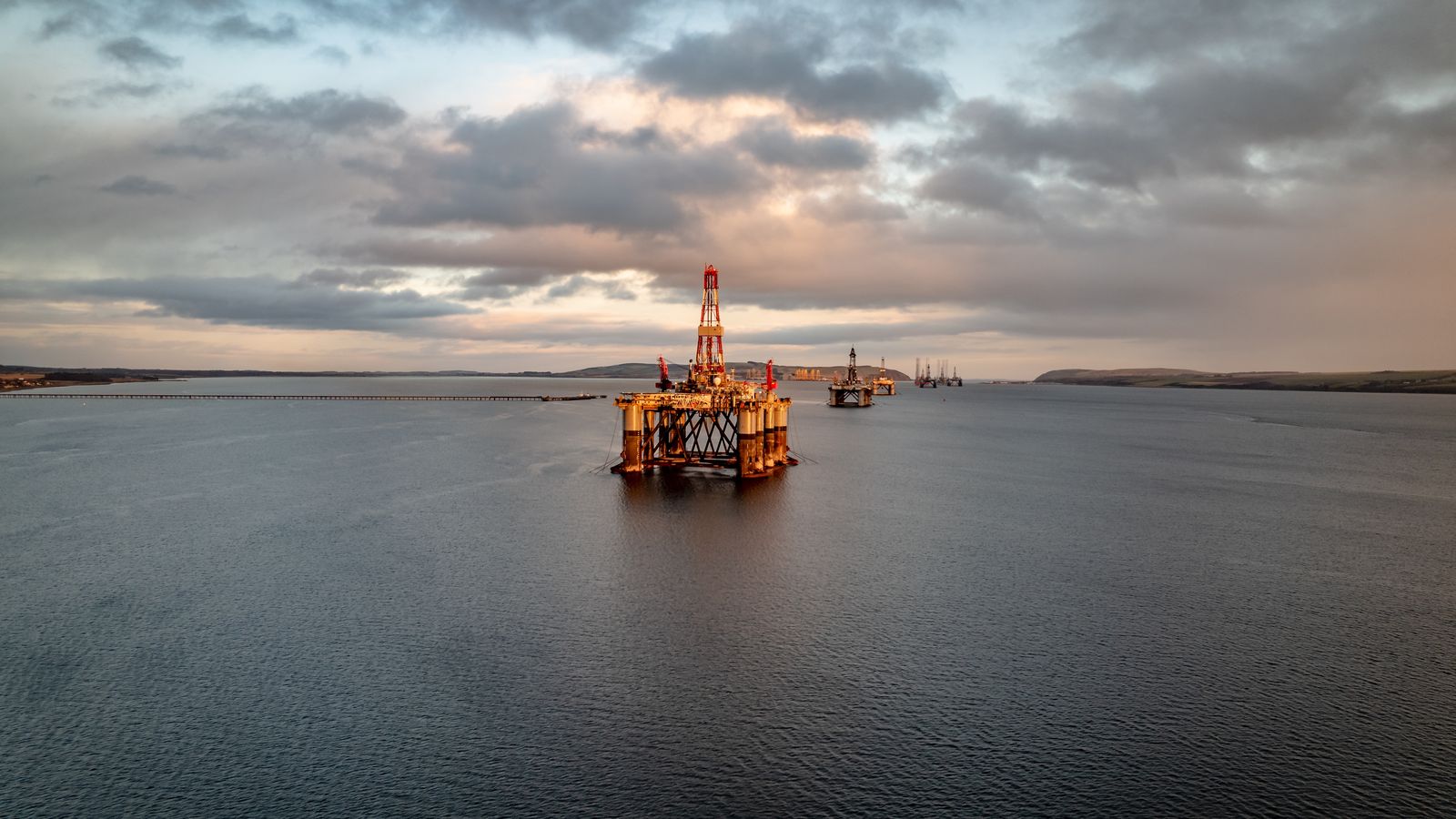
The International Tribunal for the Law of the Sea, sitting in Hamburg, delivered its order on Saturday 28 November 2026. Argentina had asked it to order the UK to make sure no new drilling and no production infrastructure went ahead for the Sea Lion project, in the North Falkland Basin, while an arbitral tribunal is set up to hear Argentina's main claim. By 18 votes to 3, the tribunal rejected the request. It found that Argentina's claims did not appear, at first sight, to give the arbitral tribunal jurisdiction, because deciding them would mean deciding sovereignty over the islands, which is outside the Law of the Sea convention.
The tribunal placed on record the UK's assurances that drilling will not start before 21 March 2027, that extraction will not start before March 2028, and that no further licences will be granted while the licensing regime is suspended. The Foreign Secretary and the Attorney General welcomed the decision and urged Argentina to end its wider economic pressure on the islands. As Tiffany Wertheimer, Amy Walker and Joe Inwood reported for BBC News, Argentina's President said the decision "is not the final word", and the Argentine government said five people would face sanctions over their part in the project.
Sea Lion is operated by Navitas Petroleum, with 65%, and Rockhopper Exploration, with 35%. The two firms took the final investment decision in December 2025 and said in August 2026 that phase 1 was on track for first oil in the first quarter of 2028. The BBC puts the field's estimated oil at 1.7 billion barrels.
What it means for your business
The carbon in the reserves. The most recent independent evaluation, by Netherland, Sewell & Associates for Rockhopper, puts the proved and probable (2P) reserves for the first two phases at 314 million barrels, with a further 462 million barrels of best-estimate resources pending development in later phases. The US Environmental Protection Agency works out burning a barrel of crude oil at 0.43 tonnes of CO2 (5.80 million Btu per barrel times 20.31 kg of carbon per million Btu, times 44/12 to turn carbon into CO2). On that figure:
- 2P reserves, phases 1 and 2: 314 million barrels, about 136 million tonnes of CO2.
- With the resources pending development: about 335 million tonnes in all.
- A cross-check on UK factors: if every barrel of the 2P reserves were burned as fuel oil, at the 2026 government factor of 3.17492 kg CO2e per litre, the figure would be about 159 million tonnes. Fuel oil is one of the heaviest oil products, so treat this as a high-end check.
The 2P figure alone is about 65% of the 209 million tonnes that Rosebank's own assessment gives for burning its oil and gas, a field that is still awaiting a decision from the Energy Secretary (our Rosebank story). All of these figures cover burning only: producing, refining and shipping the oil would add more. Sea Lion's oil would be sold on world markets, so its emissions would land wherever it is burned.
Your side of the ledger. Those tonnes turn up in the footprints of whoever burns the fuel. A business heating its premises with 4,000 litres of kerosene a year reports 10,161 kg CO2e of Scope 1 on the 2026 government factor of 2.54016 kg per litre. The producer counts the same burning as Scope 3 under the GHG Protocol, which is why footprints are never added up across companies.
Nothing changes in what you report. The ruling is about interim measures, not about emissions rules, and the 2026 fuel factors are fixed for the year whichever field the oil comes from.
What to do now
- Carry on reporting fuel as before. Litres from delivery notes and fuel cards, or kWh from bills, times the factor for the year.
- Show your oil share. Customers and public buyers increasingly ask how much of a supplier's footprint comes from oil and gas. A Scope 1 split by fuel answers that in one line, and an oil boiler is often the biggest single item for a small site.
- Watch the main case. Argentina's claim now goes to an arbitral tribunal that has still to be set up. We will cover it when it rules.