What happened
On 6 November 2026 the International Energy Agency (IEA) published Renewables 2026, its yearly report on renewable power, heat and transport fuels, with a news release that sets out the headlines:
- Almost 4,800 GW in six years. Global renewable power capacity is forecast to grow by almost 4,800 gigawatts between 2026 and 2031, almost 60% more than was added in the previous six years. Solar PV makes up more than three quarters of the growth, followed by onshore wind.
- Security, not climate, is now the driver. Since the war that began at the end of February sent fuel prices up, the IEA says countries are building renewables mainly to cut their exposure to imported fuels. Its Executive Director, Fatih Birol, said renewables supply a third of the world's electricity today and will get "closer to half of it" within five years.
- Growth spreads beyond China. China stays the biggest builder, but its share of new capacity falls from over 60% in 2025 to an average of 53% after changes to its renewable energy policies. India becomes the second-largest growth market, with its capacity more than doubling by 2031, and for the first time emerging economies outside China are expected to add as much as advanced economies. As Yagnoseni Das reported for Carbon Pulse, the IEA also expects China's slowdown to make this year's additions the first fall in 21 years, before growth resumes.
- Small systems matter too. Rooftop solar bought by households and small businesses facing high fuel prices has already improved electricity supply for around 70 million households, the report finds. Renewable energy used in transport is forecast to rise by more than 60% by 2031.
- Grids are the bottleneck. Advanced-stage renewable and storage projects waiting for a grid connection rose by 60% in a year to 3,000 GW, four times the wind and solar capacity connected last year. The IEA's top priority is for grid investment to keep pace.
What it means for your business
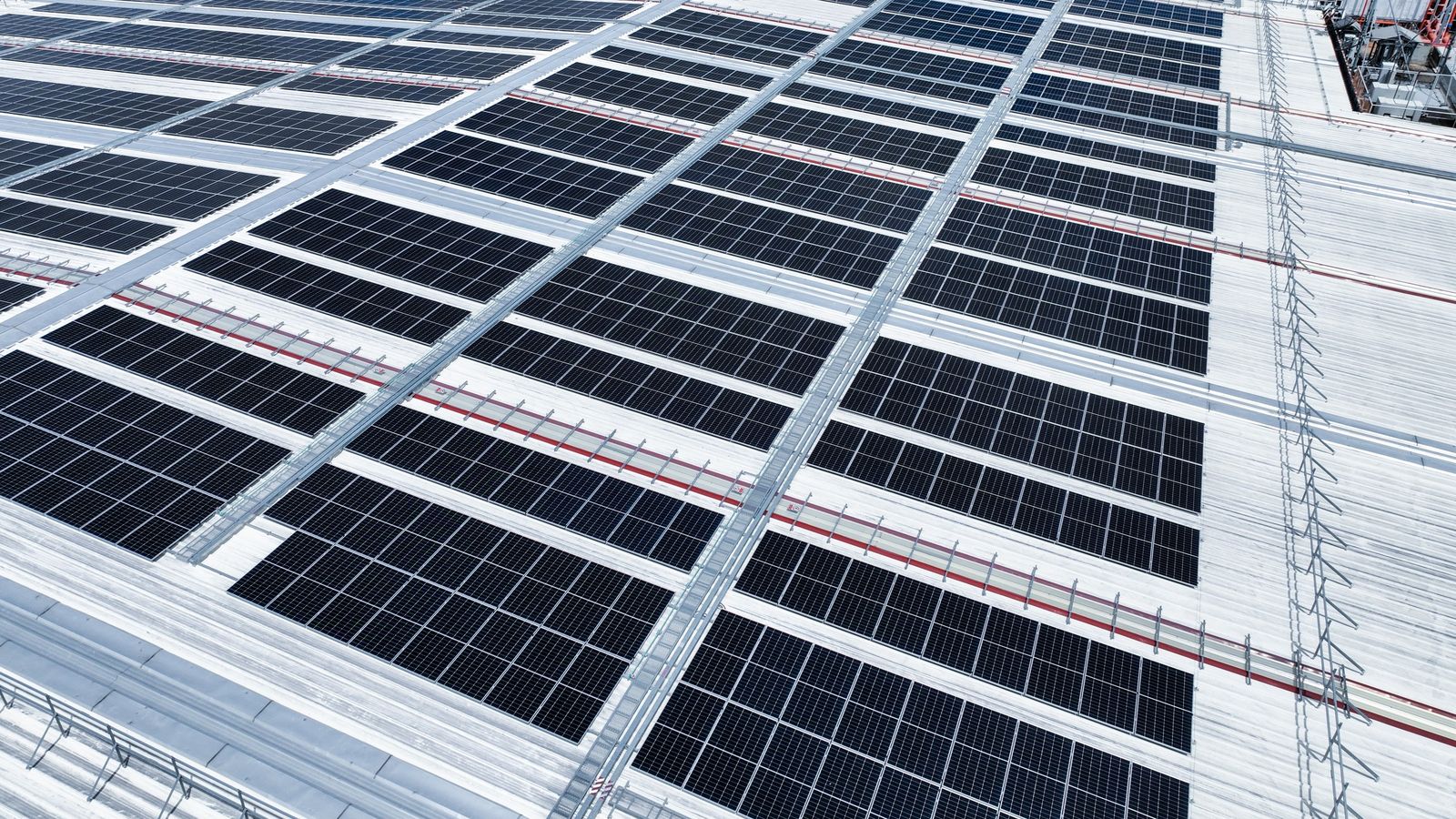
The same reason applies on a business roof. The IEA's point is that countries now build renewables to protect themselves from fuel price shocks. A business with its own solar is doing the same thing on a small scale: every kWh it makes and uses is a kWh it doesn't buy at whatever the market charges that month. With UK wholesale prices driven up by the same conflict, that is the case most firms weigh first, and the carbon saving comes with it.
How it shows in your carbon report. Solar you generate and use on site cuts the grid electricity you buy, so it lowers your Scope 2 emissions. Under SECR your total energy use stays about the same (it includes the solar you use), but the emissions fall. Electricity you export does not reduce your gross Scope 2 under the GHG Protocol. Our post on rooftop solar and Scope 2 walks through the reporting rules.
The UK grid gets cleaner as the world builds. More solar and wind on the UK grid lowers the government's electricity factor year by year, which lowers every business's Scope 2 figure even without changes on site. You can see how the UK compares with other countries on our cleanest electricity grids page.
A worked example: solar used on site
Take an illustrative business whose roof system supplies 20,000 kWh a year that it uses on site, instead of buying it from the grid. The generation figure is an assumption for the example; your installer's estimate for your roof is what counts.
- On the 2026 UK government factors, grid electricity is 0.13096 kg CO2e per kWh in Scope 2 (location-based).
- 20,000 kWh of solar used instead of grid power cuts Scope 2 by 2.62 tonnes CO2e a year.
- The kWh saved are also kWh not bought, so the bill saving is 20,000 times your unit rate. Our business electricity and gas prices page tracks the official averages.
As the UK factor falls in future years, the tonnes saved by the same kWh fall too, so record the year of the factor you used each time you report.
What to do now
- Find your daytime electricity use. Solar pays best where most of the output is used on site. Half-hourly data from your supplier or smart meter shows how much you use in daylight hours.
- Ask about the grid connection early. The IEA's warning about connection queues applies in the UK too. A larger roof system needs your network operator's agreement, so ask your installer how long that takes in your area.
- Keep the generation readings. A generation meter gives you the kWh you made and used, which is the figure your carbon report needs. Our kWh to CO2e calculator converts any reading using the government factors.