What happened
The Department for Energy Security and Net Zero (DESNZ) published a short notice on 5 November 2026. Because of a sustained increase in applications, it has given Ofgem, which runs the Boiler Upgrade Scheme, permission to over-allocate vouchers. The notice itself puts a number on it: vouchers may now be allocated up to a total of £520 million in this financial year, against the £400 million budget set for 2026-27. DESNZ says the aim is to give consumers and industry certainty that vouchers will continue to be available, so heat pump installs can carry on.
It follows the record figures we reported a week ago: 9,738 applications in September 2026, the most in any month since the scheme began, driven by the £9,000 grant for buildings on oil or LPG.
What it means for your business
The risk of the money running out this winter has fallen. Grants are first come, first served until the year's allocation is used up. With applications at record levels, a building owner planning a heat pump for early 2027 had good reason to worry the budget would go first. An extra £120 million is, on our own arithmetic, room for roughly 13,333 to 16,000 more air source or ground source grants, depending on how many are at the off-gas rate. DESNZ has not given a figure.
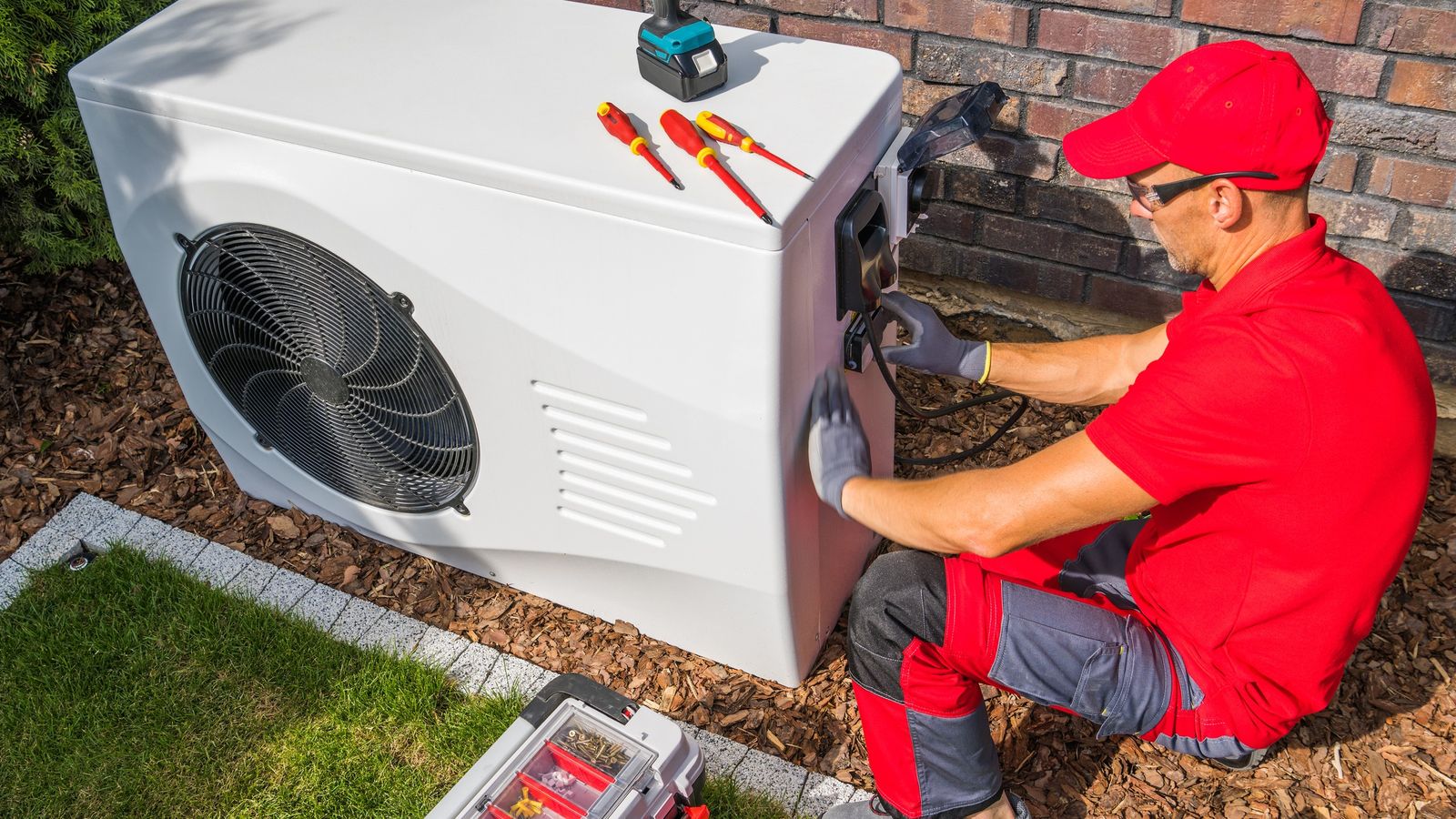
Nothing else has changed. The grant is still £7,500 towards an air source or ground source heat pump, with £1,500 more until March 2027 if the building is heated by oil or LPG and has no mains gas. You must own the building and be in England or Wales, and a single heat pump is capped at 45 kWth, so this suits small offices, shops, surgeries, workshops and halls rather than large sites.
Few businesses use it. Under 1% of the grants paid so far went to non-domestic buildings, so many owners who may qualify have not looked at it.
A worked example: a small office on mains gas
Take an illustrative small office that burns 40,000 kWh of mains gas a year in a 90% efficient boiler, and replaces it with an air source heat pump with a seasonal efficiency of 3 delivering the same heat.
- Today: 40,000 kWh of natural gas at 0.18231 kg CO2e per kWh is 7.29 tonnes CO2e (Scope 1).
- Heat pump: 36,000 kWh of heat at a seasonal efficiency of 3 needs 12,000 kWh of electricity. At 0.13096 kg CO2e per kWh that is 1.57 tonnes CO2e (Scope 2).
- A cut of about 78% in heating emissions, before any solar or green tariff. The saving is bigger still in a building on oil or LPG, as our earlier example of a rural workshop shows.
Figures use the 2026 government conversion factors, the same ones a SECR report or a Carbon Reduction Plan would use.
What to do now
- Check whether you may qualify. Read the conditions on GOV.UK. Your installer confirms the rest.
- Get a quote while vouchers are available. An MCS-certified installer applies for the voucher on your behalf and must fit the system within the voucher's validity. The extra allocation buys time, not an open-ended budget.
- Off-gas? Mind the date. The extra £1,500 for oil and LPG buildings runs until March 2027.
- Measure before you switch. Keep a full year of gas, oil or LPG use, so your next report can show the saving and explain why Scope 1 fell and Scope 2 rose.