What happened
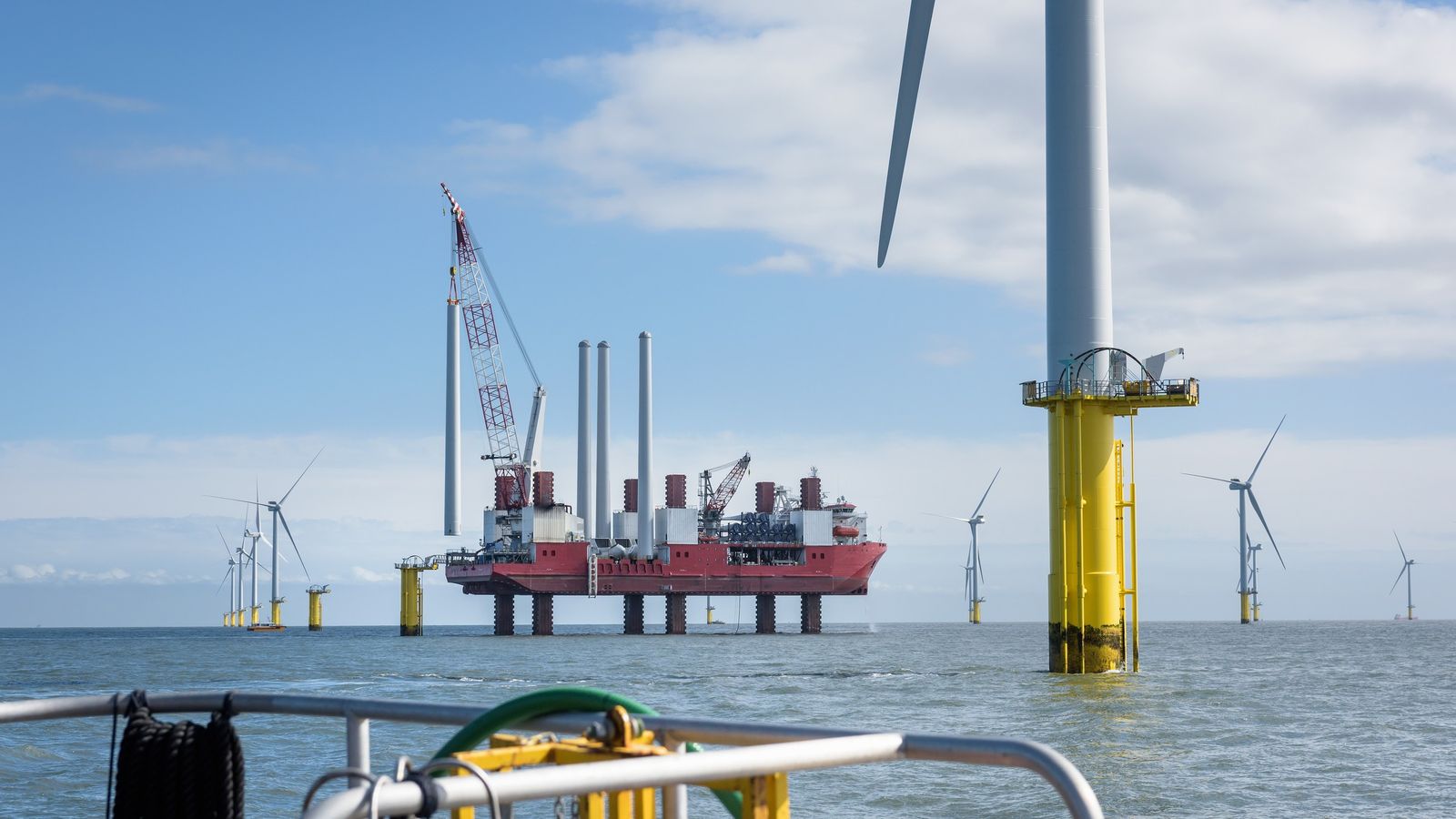
On 10 November 2026, energy company RWE and investment firm KKR announced they had reached financial close on two offshore wind farms, Vanguard West and Vanguard East, between 50 and 80 kilometres off the Norfolk coast. Each will have 1.4 GW of capacity, 2.8 GW in all, and the total investment, including the wind farms' transmission links, is around £12 billion. KKR now owns half of each project.
The financing comes from 35 international banks, which RWE calls the largest ever project financing for UK offshore wind, and includes a £1 billion commitment from the publicly owned National Wealth Fund, its largest in offshore wind so far. Both projects won 20-year inflation-linked Contracts for Difference in the government's Allocation Round 7 at £91.20 per MWh in 2024 prices.
On the morning of 11 November, ahead of the COP31 leaders' summit in Türkiye, the Prime Minister's Office welcomed the investment, saying it is believed to be the biggest of its kind in UK history and will support more than 2,400 jobs. Prime Minister Andy Burnham said "every turbine we put up is power under British control". The government says the farms will supply the equivalent of around 3 million homes. Offshore construction starts in early 2027, and both are due to be fully commissioned in 2030. The same release says SSE has contracted Siemens Energy for the turbines and substations of the next phase of its Berwick Bank wind farm off Scotland.
What it means in carbon
Neither release gives an expected yearly output, so here is a rough guide. In 2025, UK offshore wind farms ran at a load factor of 36.1%, according to the government's energy statistics (DUKES table 6.3). At that rate 2.8 GW would produce about 8.9 TWh a year. The same amount of electricity bought from the grid would count as about 1.2 million tonnes CO2e of location-based Scope 2 under the 2026 government factor of 0.13096 kg CO2e per kWh. That is a measure of size, not a figure for emissions avoided: what the wind farms actually displace depends on which power stations they replace in 2030, when the grid will be cleaner than it is now. Output also varies with the weather from year to year.
What it means for your business
Nothing changes in this year's carbon report. An illustrative business using 200,000 kWh of grid electricity a year reports 26.19 tonnes CO2e of location-based Scope 2 under the 2026 factors, and that stays the same until the factor for a later year is published. As more wind farms like Vanguard start generating, the government factor should fall, and the same kWh will count for less in your report without you doing anything.
If you want lower market-based Scope 2 sooner, the route is a renewable tariff backed by certificates or a power purchase agreement (PPA) with a generator. Our guide to green tariffs and location-based versus market-based reporting explains how each shows in your figures.
What to do now
- Report this year with this year's factor. Use the 2026 government factor for grid electricity and keep your kWh from your bills.
- Check what your tariff really buys. If your supplier sells a green tariff, ask which generators and certificates back it, so you can report market-based Scope 2 correctly.
- Plan electrification with the trend in mind. If you are weighing a heat pump or electric vans, the grid factor they are measured against is falling as projects like Vanguard come online, which improves the carbon case over time.