ما الذي حدث
Martin McCluskey MP, the Minister for Local Energy and Jobs at the Department for Energy Security and Net Zero, spoke to the ADE, the decentralised energy trade body, in Sheffield on 22 October 2026. The Government published the transcript on 23 October. The main points:
- Targets. Over the next ten years the Government wants heat networks to meet 7% of heat demand in England, double today's level, and a fifth of all heat in England by 2050.
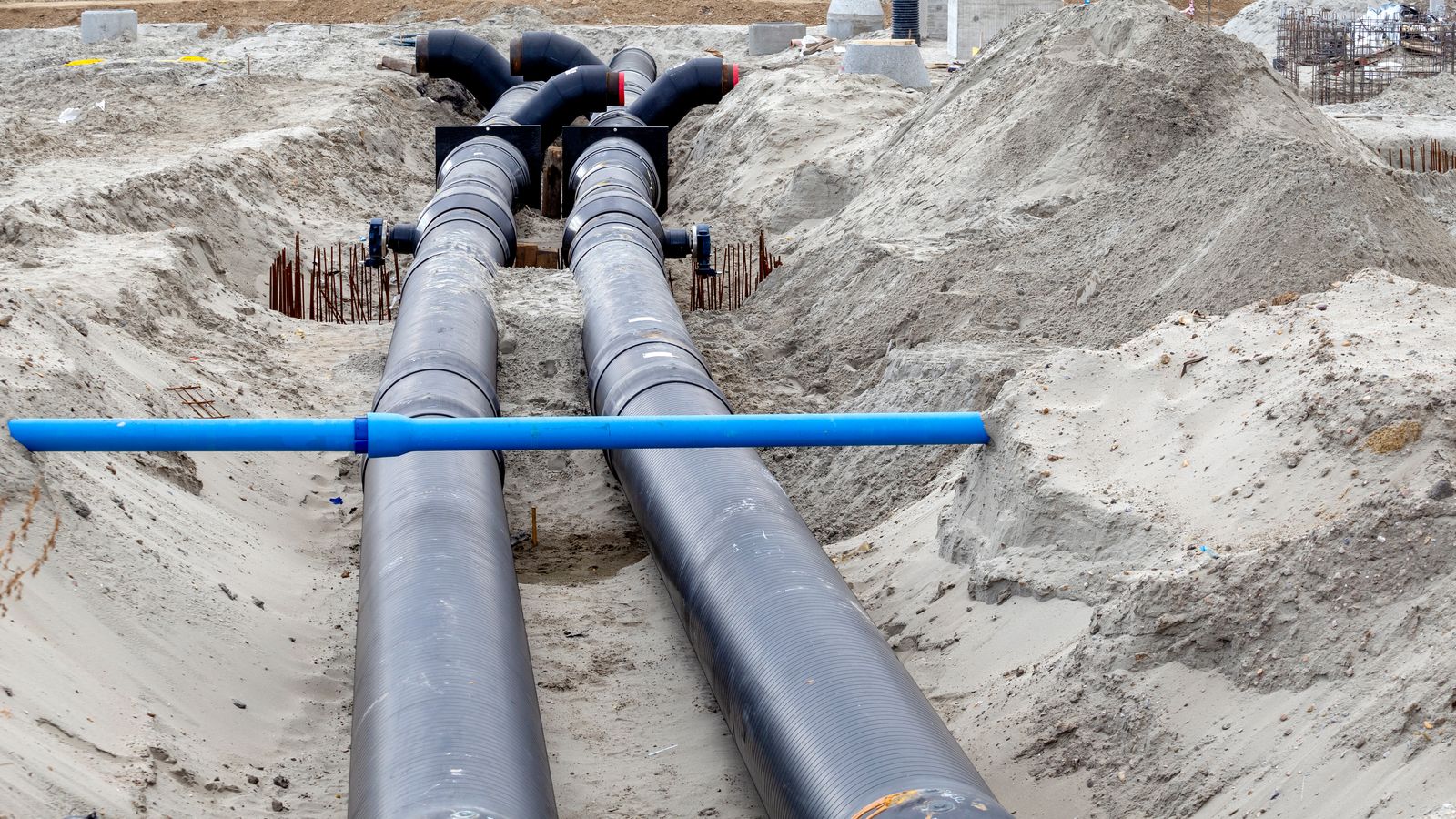
- Funding. Across four Green Heat Network Fund announcements in the past 12 months, more than £200 million has been allocated to twenty low carbon heat network projects, using heat from data centres, sewers, rivers, energy from waste plants and large heat pumps. The Government is also assessing options including a regulated asset base model to bring in long-term investment.
- Regulation. Ofgem is the new regulator, with powers to act on unfair prices or poor service, and the Government consulted earlier this year on minimum technical standards for networks.
- Zoning. At least 10 of the biggest English towns and cities will get support to set up heat network zones soon after the zoning regulations go live.
Two smaller publications came alongside. On 22 October DESNZ updated its list of heat networks notified under the Heat Network (Metering and Billing) Regulations 2014, covering January 2014 to January 2026, which is a quick way to check whether your building is on a known network. On 23 October it updated the Heat Training Grant guidance: people based in England can get up to £500 towards approved heat network courses, with providers applying on their behalf.
The speech came as industry pushed for more use of waste heat. As Matilda Cox reported for edie, a report from Energy Systems Nexus counts almost 4,780 untapped sources of recoverable heat within 1km of heat network zones, from data centres to factories.
Where the rules stand
Since 27 January 2026 Ofgem has regulated heat networks in England, Scotland and Wales. Existing networks were automatically authorised, and operators must register with Ofgem by 26 January 2027. In England, the Government's response on zoning (21 January 2026) says buildings in a zone may be asked to connect, including existing non-domestic buildings using more than 100 MWh of heat a year with a wet heating system, roughly a medium-sized office block. From 2030, zone networks will have to meet a carbon limit. The zoning regulations themselves were expected to be laid in spring 2026; on 24 October we could not find them on legislation.gov.uk, and the minister still spoke of them as going live in future. So for now, connecting is a commercial choice.
How to report heat from a heat network
Heat you buy is Scope 2, like electricity: the fuel is burned in someone else's energy centre. Multiply the kWh of heat on your bill by an emission factor:
- The operator's own factor, if it has one. The government factor is an industry average for heat from combined heat and power plants, and DESNZ says supplier-specific data based on a network's true fuel mix should be used where it exists. A network running on waste heat or heat pumps could be far below the average; one running on gas boilers could be above it.
- Otherwise, the government factor: 0.17529 kg CO2e per kWh for 2026.
Losses in the network's pipes are a separate Scope 3 line in the government set (0.00945 kg CO2e per kWh in 2026), as we explain in our post on distribution losses.
مثال عملي
An illustrative business needs 60,000 kWh of heat a year. On a heat network it is billed for that heat. With its own gas boiler, assumed 85% efficient for this example, it would burn 70,588 kWh of gas to get the same heat.
| Heat source | Energy bought | المعامل (2026) | kg CO2e |
|---|---|---|---|
| Heat network, government factor (Scope 2) | 60,000 kWh heat | 0.17529 كغ لكل kWh | 10,517 |
| Own gas boiler (Scope 1) | 70,588 kWh غاز | 0.18231 كغ لكل kWh | 12,869 |
On the government average, the heat network comes out at 10.52 tonnes against 12.87 tonnes for the boiler, about 18% lower, because each kWh of heat from the boiler carries 0.21448 kg CO2e. Distribution losses would add 567 kg to Scope 3. The real difference depends on the network: the average can't show a network built on waste heat or heat pumps, which is why the operator's own figure matters. If you are weighing a heat pump instead, see the carbon maths for an office heat pump, and if your gas bill shows meter readings rather than kWh, how to turn them into kWh and CO2e.
What to ask the heat network operator
- Your metered heat use in kWh for each billing period, not just a total charge.
- An emission factor in kg CO2e per kWh of heat delivered, the year it applies to, the heat sources behind it, and whether it already includes pipe losses, so you don't count them twice.
- Whether the network has registered with Ofgem, and any plans and dates to change its heat source.