Što se dogodilo
The Changing Markets Foundation, a campaign group, published the fourth edition of its Methane Action Tracker on 22 October 2026, as Lucy King reported for Energy Live News. It scores dairy and coffee companies and, for the third time, 20 of the largest food retailers in Europe and the US on how they report, target and act on methane. We checked the figures below against the group's own release, rankings page and briefing.
- No retailer acts on livestock methane. None of the 20 reports methane separately at group level or has a target to cut it, and none has taken methane-specific action.
- 13 of 20 recognise the problem. They say on their websites, in some form, that methane from livestock affects the climate. The other 7, including Casino, Walmart and Mercadona, do not.
- Most report their footprint, just not the methane in it. 13 retailers report emissions across all three scopes, and 9 have an overall net zero commitment.
- UK supermarkets: Tesco is joint first with Lidl on 43.5 out of 100, having lost 2.5 points after dropping its target for plant-based sales growth. Sainsbury's is fourth on 40.5, one of the biggest movers at 7 points up. Asda scores 12.5, and the briefing says its alignment with the GHG Protocol remains unclear.
The tracker estimates that around 93% of retailers' emissions are Scope 3, mostly from meat and dairy supply chains. One subsidiary shows what disclosure looks like: Albert Heijn, part of Ahold Delhaize, reports that methane is 14% of its total greenhouse gas emissions.
What it means for food suppliers
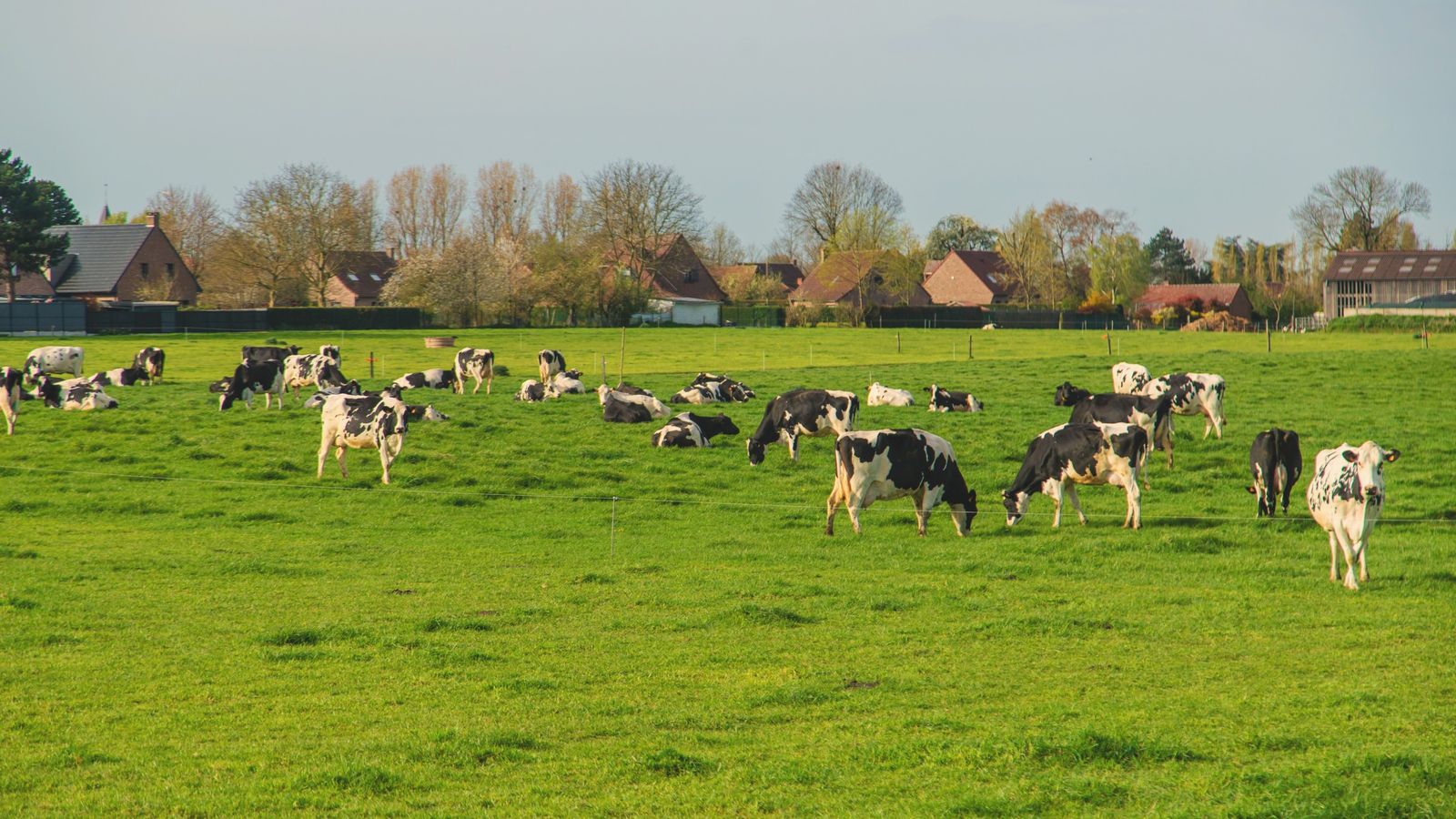
A retailer's methane is mostly its suppliers' methane. Cattle on dairy and beef farms produce it, and it travels up the chain inside every pint of milk, block of cheese and pack of beef. Under the GHG Protocol, a business that buys those products counts the farm emissions in its Scope 3 category 1, purchased goods and services. So if you make sandwiches, run a café, a pub kitchen or a catering firm, or supply a supermarket with a product that contains dairy or meat, the methane is already in your footprint and in your customer's.
The tracker does not say what any retailer will ask its suppliers, and we won't guess. But the pressure it describes only has one place to go: a retailer can't report or cut methane without figures from the businesses that sell it meat and dairy. If you supply a large food company, read why a customer's net zero target involves you.
What GWP means for methane
Carbon footprints add different gases together as CO2 equivalent (CO2e). Each gas is multiplied by its global warming potential (GWP): how much warming a kilogram causes over 100 years compared with a kilogram of CO2. The UK government conversion factors for 2026 use a GWP of 28 for methane, so 1 kg of methane is 28 kg CO2e. The GHG Protocol's table of the latest IPCC values gives 27.0 for methane from non-fossil sources, which includes livestock. Higher figures you may see quoted for methane use a shorter time period; carbon reports use the 100-year value. Our post on AR5 and AR6 GWPs explains the difference.
How a small firm estimates it: a worked example
The quick way is spend. Take an illustrative sandwich and catering business with these food purchases in a year, net of VAT, using Defra's 2023 spend multipliers:
| Što je kupljeno | Kategorija Defre | Izdaci (£) | kg CO2e po £ | Tone CO2e |
|---|---|---|---|---|
| Dairy products (milk, cheese, butter) | Dairy products | 30,000 | 0.91 | 27.16 |
| Meat products (ham, chicken, bacon) | Preserved meat and meat products | 20,000 | 0.71 | 14.27 |
| Bread and bakery | Bakery and farinaceous products | 15,000 | 0.48 | 7.26 |
| Ukupno | 65,000 | 48.69 |
Dairy and meat are 77% of this spend but 85% of the estimated emissions: each pound on dairy carries 0.91 kg CO2e, against 0.48 for bread and bakery. These multipliers cover the whole supply chain, so the farm stage is inside them, but they give one CO2e figure, not a methane figure on its own. The method is explained in full in our guide to UK spend-based Scope 3 multipliers.
Spend is an average for a whole industry, and it only falls if you spend less. The better route for your biggest lines is supplier data: ask your dairy or meat supplier for emissions per kilogram or per litre of product, and whether they can give the methane part separately. If they give it in kilograms of methane, multiply by 28 to get CO2e on the same basis as the UK factors.
Što učiniti sada
- Pull a year of food and drink purchases from your accounts, net of VAT, and split meat and dairy from the rest.
- Estimate them with spend multipliers so you have a first Scope 3 figure before anyone asks.
- Ask your two or three largest meat and dairy suppliers for their own product footprints, and use them where they're better.
- Be ready to answer a customer's form. If a customer also asks you to set a target, see what to do when a customer asks for a science-based target.