สิ่งที่เกิดขึ้น
The Department for Energy Security and Net Zero (DESNZ) announced on the afternoon of 30 October 2026 that it had approved three nationally significant energy projects:
- Sea Link, a 2 GW connection between Suffolk and Kent built by National Grid, which the government says can carry enough electricity for the equivalent of 2 million homes. The Planning Inspectorate's project page describes a new converter station near the planned Friston substation in Suffolk, high voltage direct current cables to the coast, about 130km of cable under the sea to Pegwell Bay in Kent, and a second converter station near Richborough substation. National Grid will run a community benefits scheme with more than £1 million each for Kent and Suffolk.
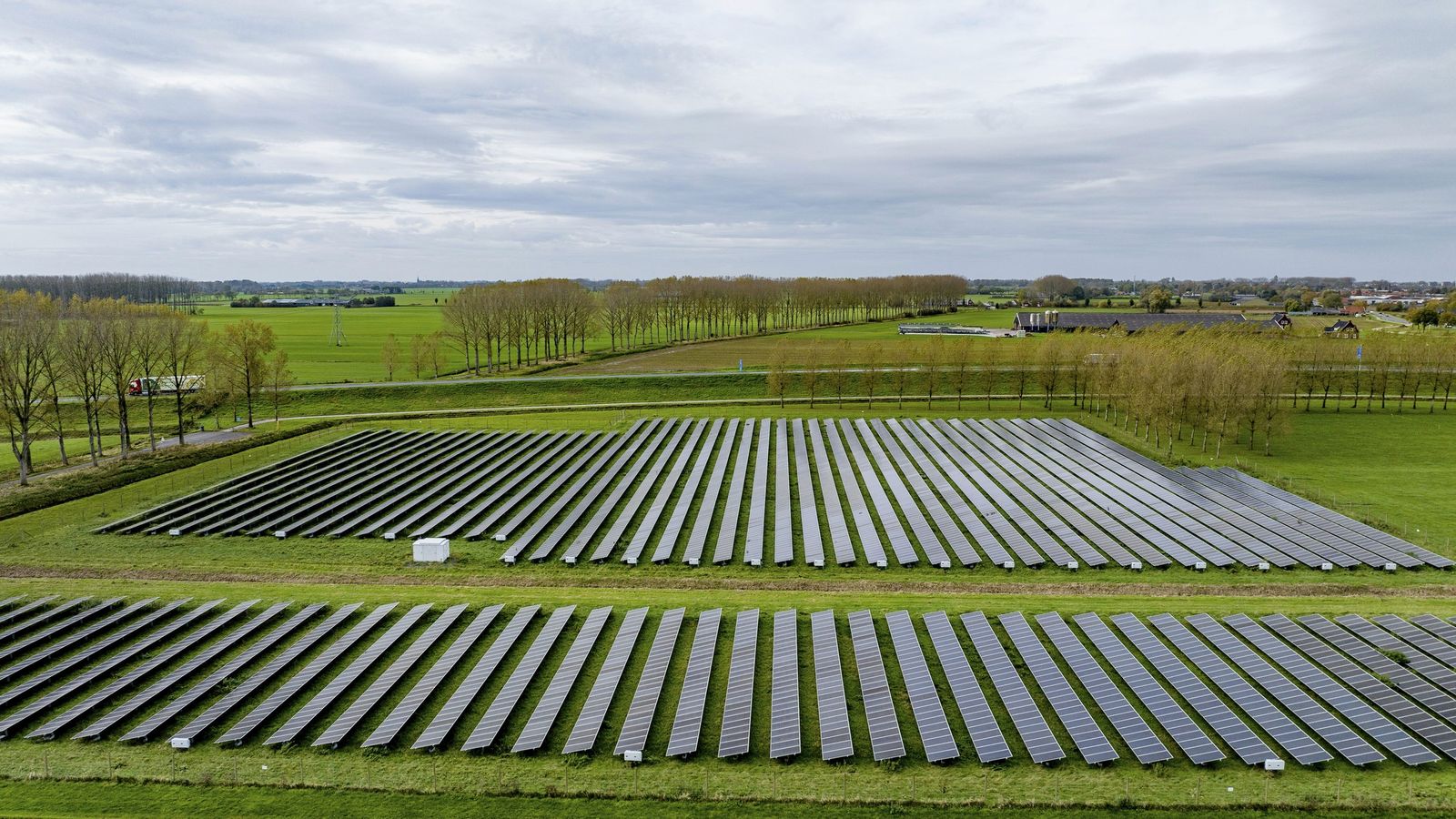
- Great North Road Solar and Biodiversity Park near Newark in Nottinghamshire, 800 MW, which the government says will be the joint biggest solar farm in the country by capacity alongside Springwell. The developer, Elements Green, estimates enough electricity for around 400,000 homes, with sheep grazing between the panels.
- Frodsham Solar in Cheshire, which combines solar panels with battery storage. Its developer says it could generate enough for 40,000 homes.
The government says the decisions bring the number of nationally significant clean energy projects approved since July 2024 to 39. It also says it will let developers and businesses build their own grid connections where appropriate, to cut delays and costs.
ความหมายต่อธุรกิจของคุณ
Bills: a longer-term effect, with no figure yet. The government's case for Sea Link is that moving power from where it is generated to where it is needed reduces the need to pay generators to switch off when the network cannot carry their electricity. Those payments end up in network costs that every business pays through its bill. DESNZ has not put a number on the saving, and the link still has to be built, so this does not change your unit rate now.
Carbon: cleaner power lowers the factor you report with, a year at a time. If you report electricity on the location-based method, as SECR and most carbon reduction plans do, you multiply your kWh by the government's UK average factor for the year: 0.13096 kg CO2e per kWh for 2026. More solar and wind, and the cables that let the grid use it instead of paying it to switch off, pull that average down in later years. On NESO's half-hourly data, which our GB electricity generation mix tool summarises, solar has supplied 8.5% of Britain's electricity in 2026 so far against 6.5% in 2025, and the grid has averaged 141g CO2 per kWh against 130g.
Our worked figures
What 800 MW of solar produces. The government gives capacity, not output. As a rough guide, DESNZ measured a median load factor of 9.2% for solar under the feed-in tariff in 2024/25, the lowest in its series, in a year with fewer sun hours. At that rate 800 MW would produce about 645 GWh a year. Those installations are far smaller than this farm, and output varies with the site and the weather, so treat this as a rough guide. The same 645 GWh bought from the grid would count as 84,435 tonnes CO2e at the 2026 UK factor. That is not a precise saving: the factor is an average, and what the farm actually displaces depends on which power stations it pushes off the system at the time.
What a cleaner grid has already done to a business footprint. Take an illustrative business using 40,000 kWh of grid electricity a year. On the 2020 government factor that was 9.33 tonnes CO2e. On the 2026 factor the same kWh is 5.24 tonnes, 44% lower, without the business changing anything.
สิ่งที่ควรทำตอนนี้
- Keep reporting kWh, not just tonnes. Because the factor falls as the grid gets cleaner, your tonnes can drop while your use rises. Record kWh each year so you and your customers can see whether you are actually using less. Our explainer on the UK grid carbon intensity trend shows how the factor has moved.
- Use the right year's factor. Match each bill to the factor for the year the electricity was used. Mixing years makes a fall look bigger or smaller than it was.
- If you buy a green tariff, report both methods. Location-based uses the grid average; market-based uses what your contract says. Our post on green tariffs and the two methods explains the difference.
- If you are waiting on a grid connection, watch for the government's promised rules on businesses building their own connections. DESNZ has not yet published the detail.