CBAM in one paragraph
The UK charges its own heavy industry for carbon through the UK Emissions Trading Scheme. CBAM puts a matching charge on some of the same goods when they are made abroad and imported, so overseas producers don't have a price advantage just because their emissions aren't priced. It's set out in the Finance Act 2026 and is run by HMRC as a tax, not as a reporting scheme.
Which goods are covered
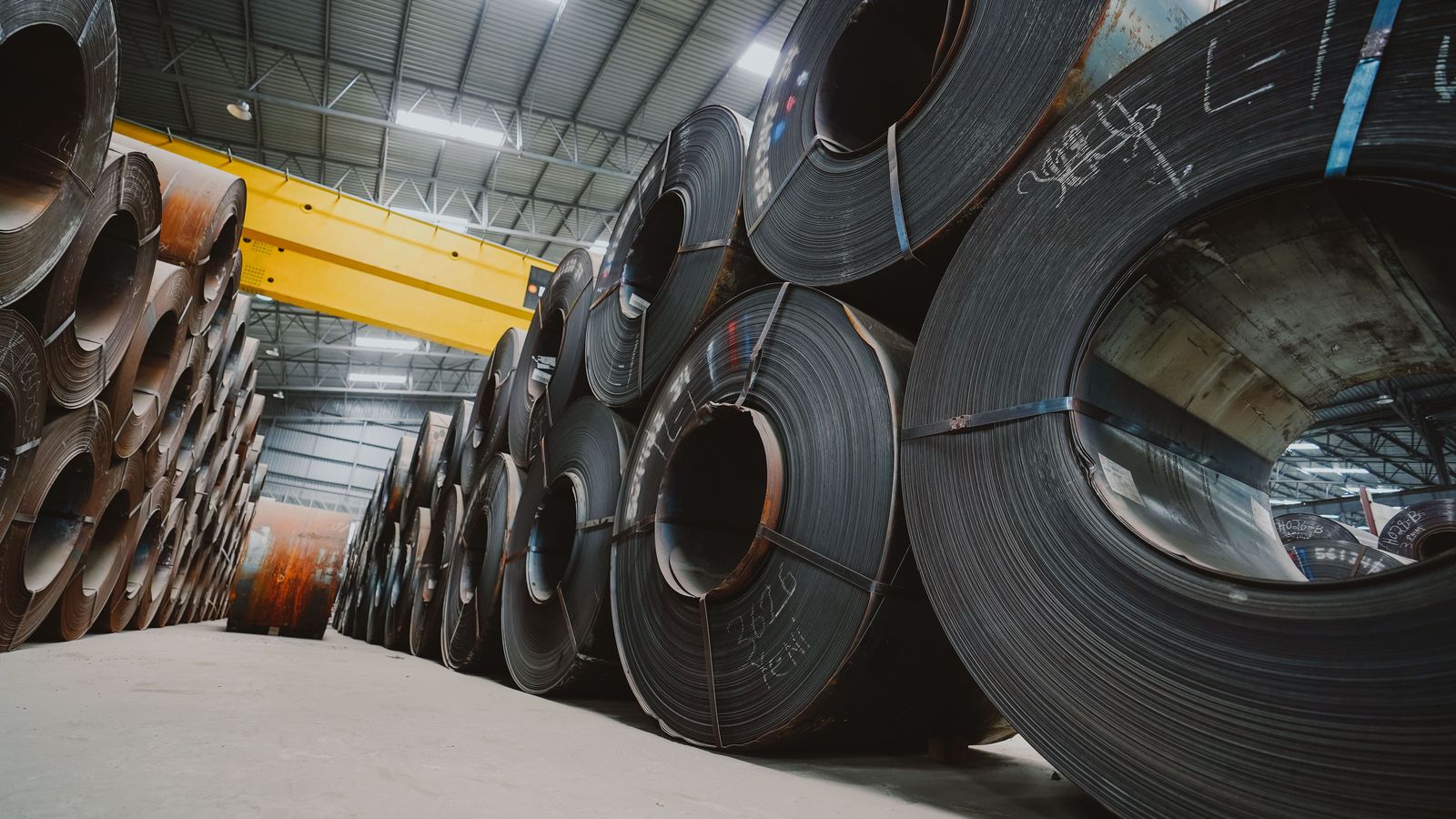
Five sectors: aluminium, cement, fertiliser, hydrogen, and iron and steel. Within those, only goods with the commodity codes listed by the government are in scope, and some are excluded, such as aluminium and steel scrap. If you import, your customs broker can tell you whether your commodity codes are on the list. Goods that originate in the UK are outside CBAM.
Who has to register
The importer is liable: the business in whose name the customs declaration is made, or on whose behalf it is made. You need to register with HMRC when the value of your CBAM imports reaches £50,000 on either test:
- Looking forward: on any day, you expect CBAM imports in the next 30 days to reach £50,000.
- Looking back: on the first day of each month, CBAM imports over the previous 12 months reached £50,000. In 2027 you only look back to 1 January 2027.
The value is the customs value, the same figure used for import duty.
The key dates
| Date | What happens |
|---|---|
| 1 January 2027 | CBAM applies to goods imported from this date. Start keeping records. |
| 31 January 2028 | Deadline to register for anyone who became liable during 2027 |
| 31 May 2028 | First return and payment, covering all of 2027 |
| From 1 January 2028 | Quarterly returns. The first, for January to March 2028, is due by 31 July 2028. |
Records must be kept for six years from the later of the date they were created and the end of the accounting period they relate to.
How the charge is worked out
The charge is based on the direct emissions embodied in the goods, in tonnes of CO2e per tonne of product, multiplied by the weight imported and the CBAM rate. Any carbon price already paid abroad under a qualifying scheme can be deducted. Importers have two ways to get the emissions figure:
- Actual data from the overseas producer, verified by an accredited verifier. This is usually lower than the default, but the producer has to measure it and pay for verification.
- Default values set by the government for each CBAM good, published by HMRC on 16 October 2026. These need no input from the supplier.
What your customers will ask you
Most small businesses meet CBAM through someone else's paperwork. Which questions you get depends on where you sit:
| You are | What happens |
|---|---|
| A UK business importing steel, aluminium, cement, fertiliser or hydrogen yourself | You may need to register if you pass £50,000. Ask your overseas suppliers now whether they can provide verified emissions per tonne, or plan to use default values. |
| A UK business buying these materials from a UK stockholder or merchant | You don't register. Expect price changes from 2027, and possibly a CBAM surcharge line on quotes. |
| A UK producer exporting these goods to the EU | You don't register in the EU, but EU importers owe the EU CBAM on imports since January 2026 and will ask you for emissions per tonne, ideally verified. |
| A UK producer selling these goods within the UK | Not covered by the UK CBAM. Customers may still ask for product emissions to compare you with importers. |
If a customer sends a CBAM data request and you aren't a producer of CBAM goods, say so plainly; it is a common case of a questionnaire going to every supplier at once. Our guide to what large customers can and can't ask of small suppliers covers how to reply.
The UK and EU link
The UK and the EU are negotiating to link their emissions trading schemes. A link could lead to goods moving between them being exempt from each other's CBAM: their May 2025 summit common understanding says a link should create the conditions for mutual exemptions. No agreement has been signed yet. Until then, plan as if both CBAMs apply.
Where CBAM fits with your own carbon reporting
CBAM is a tax on specific imported goods. It doesn't change what goes in your Carbon Reduction Plan or SECR report. But if you buy a lot of steel, aluminium or cement, a supplier's CBAM emissions figure is better data for your Scope 3 purchased goods than a spend-based estimate, so keep it when you get it. Our guide to the 15 Scope 3 categories explains where purchased materials fit, and our guide to answering a customer's carbon data request covers what to send back.